

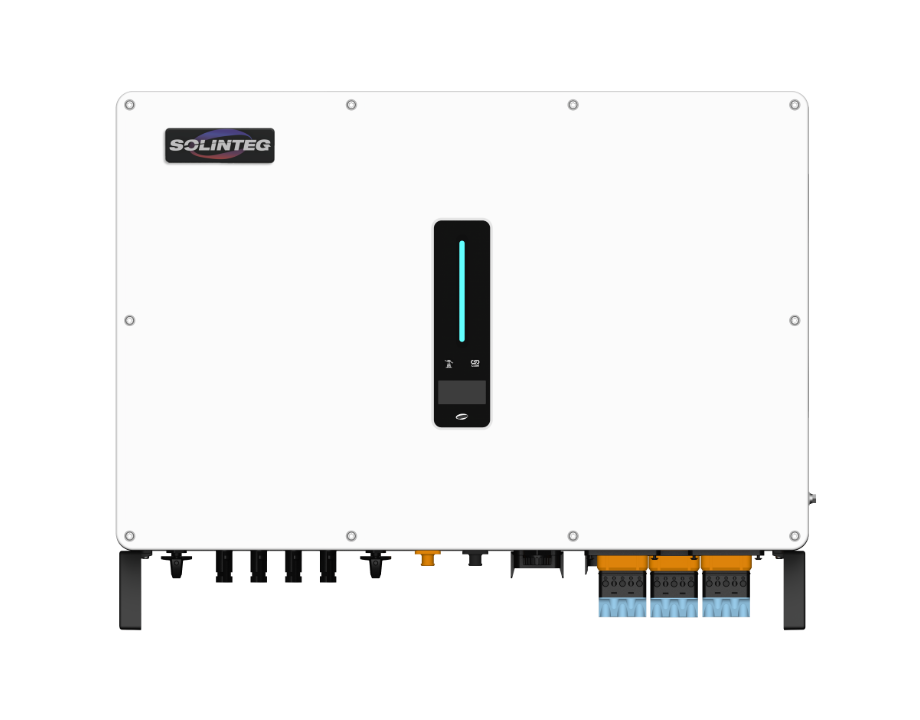
When the grid fails, maintenance is the difference
The stakes are visceral: a sudden outage at a data center or cold storage warehouse can cascade into hundreds of thousands in losses. That’s why operators increasingly choose an all in one energy storage system — a compact mix of inverter, battery modules and controls — but hardware alone won’t guarantee uptime. A focused maintenance program prevents premature capacity loss, preserves cycle life, and keeps the battery management system (BMS) honest.

Pinpoint the real problems first
Start by diagnosing the failure modes that kill battery value: deep, repeated depth of discharge, excessive temperature swings, and unchecked current imbalance. Use trending logs from your BMS and inverter to find patterns: rising internal resistance, sudden state of charge drift, or asymmetric module voltages. These are not abstract metrics; they signal chemical stress and thermal runaway risk if ignored.
Daily and weekly checks that pay back fast
Routine tasks are simple, decisive actions. Inspect ventilation and thermal management pathways, verify battery cabinet seals, and confirm that the inverter fan speeds match expected thermal curves. Check communication lines between the BMS and the supervisory controller. Log voltage, current, and state of charge daily so anomalies show up before they bite cycle life.
Monthly and quarterly maintenance: what to do
Every month, run a shallow balancing cycle and review SOC drift across modules. Quarterly, perform a controlled capacity test under a defined load profile to verify usable kilowatt-hours. Replace any module that loses more than the vendor’s specified percentage of nameplate capacity over a set number of cycles — defined, documented thresholds beat guesswork. Include thermal imaging of racks during a deliberate discharge; hotspots mean either poor connections or failing cells.
Software and settings: the invisible maintenance
Firmware and configuration are living elements of health. Keep BMS firmware current, but stage upgrades on a test bench first. Tune charge voltage and float settings to the chemistry in use; wrong float voltage shortens life. Also, set conservative alarms for depth of discharge and maximum charge rate — aggressive charge profiles shave hours off useful life for the sake of marginal availability.
Common mistakes operators make — and how to avoid them
People assume “modern” equals “maintenance-free.” That’s costly. Skipping cell balancing, ignoring thermal excursions, and allowing chronic over-discharge are the usual culprits. Another error: treating energy storage like a single appliance rather than a system with cooling, controls, and safety interlocks. Fix these by adopting a checklist-driven regime and assigning clear ownership of BMS, coolant loops, and inverter updates — a single accountable technician reduces drift and human error.
Field-proven anchor: lessons from Texas 2021
The February 2021 Texas outages reshaped how commercial sites view resilience. Facilities that paired on-site generation with robust storage and disciplined maintenance restored critical loads faster than those that waited for the grid. That episode reinforced that equipment choice (including all in one solar generator solutions) must be matched with operational rigor — not just purchased and shelved.
Integrations and alternatives to consider
All-in-one systems simplify deployment, yet some sites need modular architectures for scalability. Compare DC-coupled versus AC-coupled layouts when adding solar charging. If you audit an operational production teardown, include {main_keyword} and {variation_keyword} in the protocol so procurement and operations speak the same language. The right architecture pairs an efficient inverter with a BMS optimized for the battery chemistry you run.

Three golden evaluation metrics for every maintenance strategy
1) Effective Capacity Retention: track usable kWh versus nameplate over time and flag losses that exceed vendor guarantees. 2) Thermal Stability Index: monitor variance in rack temperatures during charge/discharge cycles — keep swings minimal. 3) BMS Alarm Response Time: measure how quickly alarms are acknowledged and acted upon; minutes matter when currents climb. These metrics translate maintenance into measurable performance.
Careful maintenance doesn’t just prolong gear — it protects operations and livelihoods. SOLINTEG sits at that intersection of reliable hardware and sensible upkeep; their integrated approach helps teams keep systems healthy, predictable, and safe. —