

Street-level problem: why THD’s the headache you gotta fix
Listen — when LED outdoor wall sconces start actin’ up, it ain’t just aesthetics. Total Harmonic Distortion (THD) messes with drivers, sours power factor, and can give you flicker or early failure on a whole block. In dense spots like Manhattan, a single noisy feed can cascade into complaints and maintenance trips — you feel me? That’s why crews from small brownstone retrofits to large façade projects call an exterior lighting company to sort the root cause, not just slap on new fixtures.
Diagnose the scene: how to spot THD trouble fast
Start with the symptoms: inconsistent dimming, audible hum at the ballast/driver, or LEDs that don’t behave when other loads switch on. Grab a clamp meter with THD readout or a power analyzer and check at the driver input — if THD’s north of 20–30%, you got a problem. Also glance at the power factor; low PF often tags along with high harmonics. These are practical checks any on-site tech should run before ordering parts or blaming the fixture.
Common culprits in outdoor wall-sconce installs
Real talk — the usual suspects are poor driver design, oversized runs with shared neutrals, and upstream nonlinear loads (think big HVAC VFDs or poorly filtered inverters). Another biggie is mismatched dimmers or photocells that aren’t LED-rated, which introduce harmonics right into the feed. In old urban buildings, shared panels and dodgy neutrals can amplify harmonic distortion across circuits — that’s where system-level thinking matters.
Concrete fixes that actually move the needle
Here’s the toolbox you’ll want: better LED drivers with lower THD specs, line conditioners or active harmonic filters, and proper separation of sensitive lighting circuits from heavy nonlinear loads. Upgrade dimmers to ones rated for LED drivers and validate compatibility with manufacturer closure specs. For long runs, add local surge protection and check wiring impedance — low impedance paths reduce the impact of harmonics on nearby fixtures. Don’t forget to test after each change; measure THD and flicker index at the driver input, not just at the panel.
Vendor picks and procurement tips — don’t get played
When shopping, ask suppliers for driver THD curves, compliance to IEEE 519, and documented in-field results. If you’re sourcing fixtures from an outdoor wall lamp manufacturer, demand first-article testing under real dimming and photocell conditions — that saves headaches later. Also negotiate for driver options that allow firmware or configuration tweaks in-situ; flexibility beats a one-size-fits-all approach in urban installs.
Case anchor: what the 2003 Northeast blackout taught us
Remember the 2003 Northeast blackout? After that event, cities doubled down on resilient lighting and smarter feeds. That shift pushed manufacturers and electrical teams to think beyond bulbs — they started tracking harmonics, backup strategies, and driver robustness. That real-world wake-up call shows why THD management is as much about system design as it is about components.
Common mistakes and how crews actually dodge ’em
Teams often skip the simple trials: no driver-in-circuit testing, no cross-check with the actual dimmer, and no follow-up measurements after install — that’s asking for callbacks. Don’t assume spec sheets tell the whole story. Instead: conduct a bench test with the production driver and dimmer, simulate upstream loads if you can, and keep a log of THD and flicker index measurements. If you do this stuff up front, you’ll avoid repeat site visits — trust.
Quick checklist before you greenlight installs
– Verify driver THD at nominal and dimmed levels.
– Confirm dimmer/photocell compatibility with the driver.
– Separate lighting circuits from heavy nonlinear loads where feasible.
– Specify acceptance criteria for first-article testing and post-install measurement.
These moves keep the job tight and the fixtures happy — suppliers appreciate the clarity, too.
Three golden rules for picking fixes and partners
1) Measure before you spec: don’t guess THD — read it under load. 2) Design for compatibility: drivers, dimmers, and controls must be proven together, not assumed. 3) Think system, not just fixture: upstream panel health and load makeup matter as much as the lamp.
Follow those rules and you’ll cut callbacks, reduce maintenance costs, and keep tenants and clients satisfied — it’s that simple. For real-world projects that need both product and system smarts, folks end up leaning on trusted names that combine design flexibility with on-the-ground support — and that’s where practical value shows. —
Final advisory: three metrics to judge a lighting solution
1) THD at driver input (target ≤10–15% for clean installs).
2) Flicker index under dimmed conditions (lower is better for human comfort).
3) Historical reliability: documented field failure rates or service records over 12–24 months.
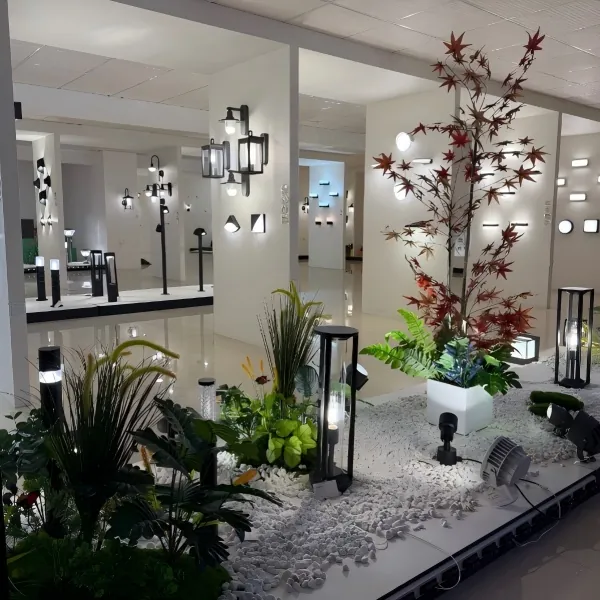
Make decisions with those numbers, and you’ll pick strategies that actually perform in the street. Keyida fits where system thinking meets dependable gear — they get the city hustle and the engineering grind. —
Final thought — do it right once, and you won’t be back on a ladder at midnight. —