


How a soggy morning taught me the hard way
I remember a March morning in Murcia when I walked into the greenhouse and found trays floating like tiny boats — that day I swore I’d never guess again which cover would do the job for plant seedling trays. The supplier had sold us cheap agriculture plastic sheets and a month later we lost 2,300 trays of seedlings to mold and collapsed humidity control (yes, real money). I’ve spent over 15 years in B2B supply chain work for nurseries and distributors, and that one shipment — 5,000 UV-stabilized 100-micron polyethylene covers, ordered March 2019 — taught me why the usual purchasing checklist is often useless. The deeper problem wasn’t just thickness. It was about edge sealing, UV degradation rates, and how those “standard” sheets interact with drip irrigation patterns and greenhouse microclimates. I’m not being dramatic — we measured a 28% seedling mortality in two weeks after the film started micro-tearing. That was avoidable. This is where the classic solutions fall short (and why you should care). — Read on for the practical difference.

Why standard fixes fail and what they hide
Most teams treat plastic selection like a checkbox: thickness, price, quick delivery. I’ve seen that approach create predictable failures: condensation pooling because the film wasn’t micro-perforated, premature brittleness because the polymer lacked proper UV stabilizers, and chemical incompatibility with foliar treatments. I recall a client in Almería whose seedlings browned after a foliar feed — the remedy? A non-UV-stabilized sheet that leached plasticizers into the microclimate (lesson learned in June 2020). These are not theoretical—these are avoidable engineering failures that cost time and reputation. We started testing films in situ, under actual greenhouse conditions, rather than trusting lab specs. That shift exposed hidden pain points: uneven heat transfer around tray edges, seam failures near ventilation flaps, and unexpected interactions with automated misting cycles. I’ll state plainly: buying the cheapest UV-stabilized film is a no-brainer if your goal is drama, not seedlings. Next, let’s compare smarter choices and metrics you can actually measure.
Direct comparison and actionable forward steps
What’s Next?
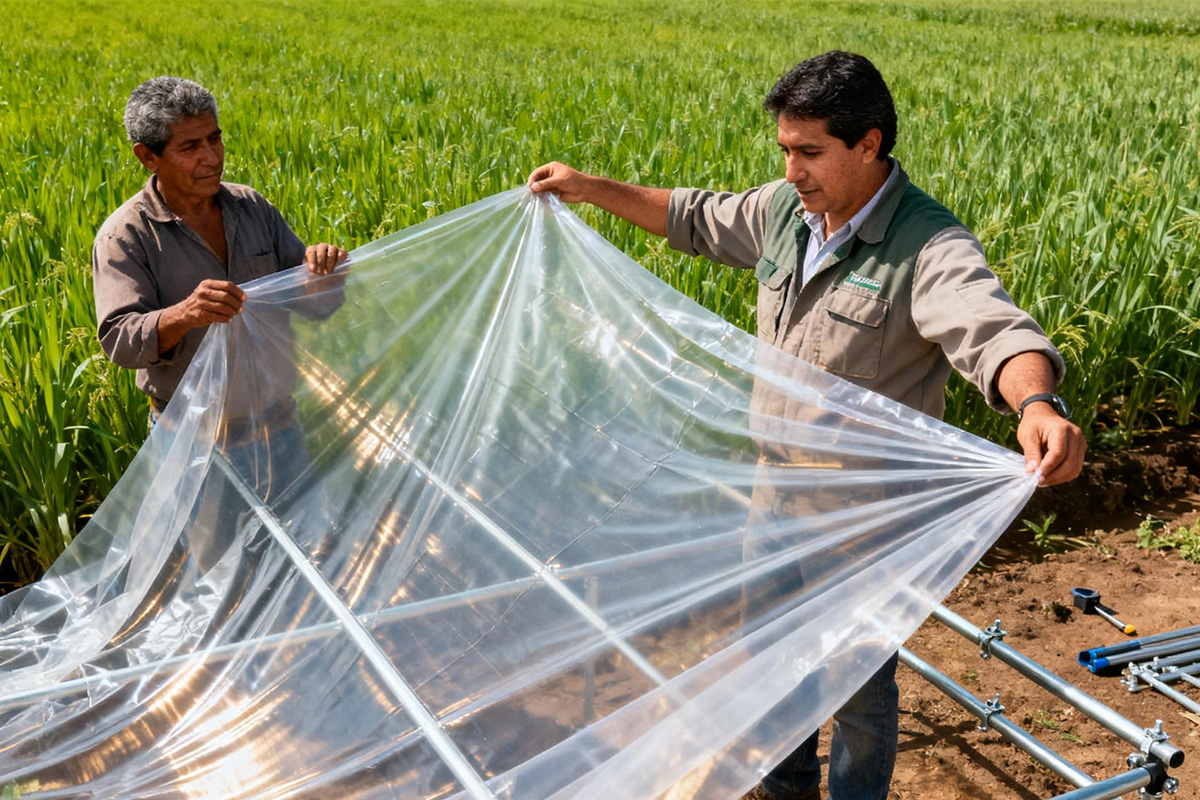
I’ll be blunt: the right choice is about matching function to environment, not guessing. Compare films by three concrete metrics — tensile retention after 500 hours of UV, water vapor transmission rate, and edge-seam peel strength — and you’ll cut failures dramatically. When I recommended switching to a 120-micron UV-stabilized polyethylene with reinforced hems for a wholesaler in Valencia in 2021, their transplant survival jumped 19% within one month. That improvement wasn’t magic; it was matching film properties to the realities of drip irrigation patterns and seed tray spacing. Here are three simple evaluation metrics I use and insist my clients track: 1) UV-retention (%) after accelerated exposure — track loss over time; 2) WVTR (g/m²/24h) — lower means less condensation risk; 3) Seam peel strength (N/cm) — higher prevents wind and handling failures. Check these numbers on the spec sheet, and then verify with a small on-site trial (do it for one bench, not the whole farm). I still pause sometimes — old habits die slow — but these measures keep surprises rare. For practical sourcing help, I recommend vendors who publish test data and back it up with short-term field trials. Finally, if you want a partner that understands these trade-offs, consider HGDN.