

Start here — why this matters to you
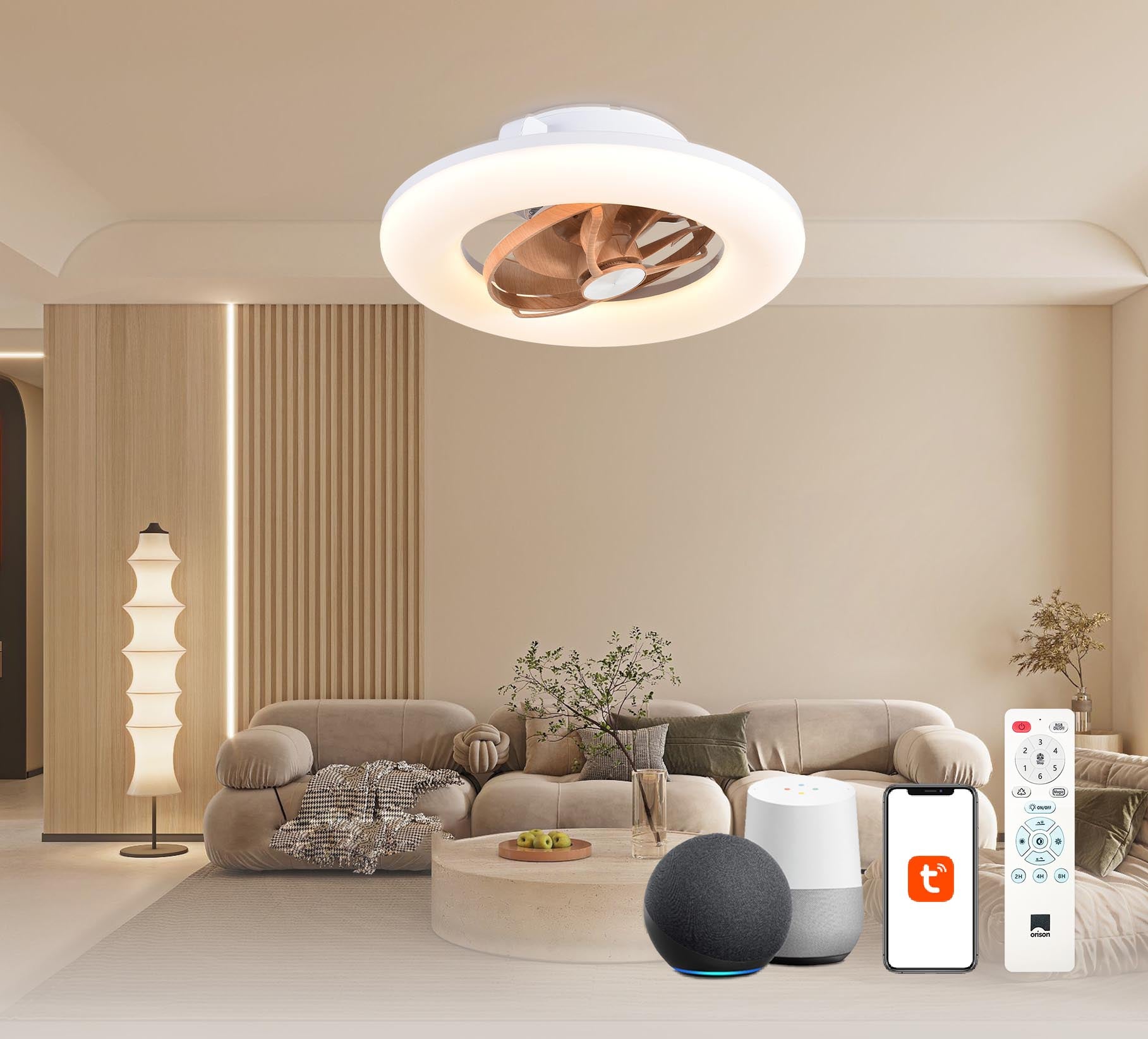
If you live in an apartment, a bungalow, or a sunny Los Angeles condo and you’re trying to cut energy bills while keeping rooms comfy, a smart fan is one of the highest-impact upgrades you can make. A well-chosen alexa ceiling fan can lower HVAC runtime, improve perceived comfort, and give you hands-free control — which matters when the afternoon heat spikes. This guide focuses on practical choices people actually use: noise, airflow, and integration with lighting and voice assistants.

How smart fans actually move air — the basics
Fans don’t cool the room like an AC — they increase air movement so your skin feels cooler. That’s where CFM (cubic feet per minute) and blade pitch matter: higher CFM at a reasonable blade pitch gives stronger circulation without revving the motor too hard. Modern high-efficiency units use a DC motor that runs cooler and uses less power than older AC motors, often controlled by PWM for smooth speed changes. Also check sone rating — it’s the human-friendly noise metric; a low sone means quieter operation during evening hours.
Lighting integration: balance function with form
Integrated lighting should do more than look good. Think about color temperature, dimmability, and glare control if you plan to use the fan as a primary light source. LED modules paired with a smart driver give you consistent lumens and long life. If you want voice control across both fan and light, confirm the model supports your ecosystem — and yes, if you ask for a voice control ceiling fan, make sure the hub and dimming protocol are compatible with Alexa or Google Home. That interoperability prevents weird behavior like the light dimming without the fan slowing down.
Placement and installation tips that actually change comfort
Placement is surprisingly important. Mounting height, room size, and use-case determine blade diameter and whether you need a downrod. For standard 8–9 ft ceilings, a flush or short downrod works; taller ceilings benefit from a longer downrod to keep airflow centered in the living zone. In rooms over 12×12 feet, step up the blade span; smaller rooms get away with 42–48-inch blades. Also consider reverse-mode for winter to push warm air down along walls — that saves heating energy in cooler months, especially useful during unpredictable Southern California nights.
Common mistakes people make — and how to dodge them
First, buying purely on looks. A sculptural fan can be charming but might have low CFM or a high sone rating. Second, underestimating wiring and ecosystem needs: some smart fans need a neutral wire, others rely on a hub. Third, assuming all remote controls behave the same — they don’t, and that can cause frustrating speed mismatches on the first night. Test samples with your actual room layout and lighting plan — do a quick mock-up if you can. It saves a return trip and a lot of frustration.
Real-world anchor: a quick field note
During the 2020–2022 Los Angeles heatwaves, I swapped a conventional fan for a smart-LED ceiling unit in my living room. The DC motor cut power draw noticeably, and the ability to schedule low-speed night circulation meant the AC kicked in less frequently — measurable savings on the bill. ASHRAE’s guidance on effective air movement supports this approach: targeted circulation can reduce cooling demand when paired with sensible thermostat settings.
What to compare before you buy
Compare these specs side-by-side: CFM (airflow efficiency), sone rating (noise), motor type (DC vs AC), and mounting options (flush vs downrod). Also check warranty terms for motor and LED modules, and confirm the availability of replacement blades or light modules — that’s a long-term cost consideration many folks overlook. If you’re installing in a rental, confirm that fixtures are reversible and that the landlord’s wiring supports any smart features.
Three golden rules for choosing the right smart ceiling fan
1) Measure performance, not hype: prioritize CFM per watt and check sone ratings in user tests. 2) Match control systems: ensure the fan’s smart driver, dimmer protocol, and ecosystem (Alexa, Google) are aligned to avoid partial functionality. 3) Plan for installation: confirm ceiling height, downrod needs, and whether a licensed electrician is required for a neutral-wire setup — those costs add up fast.
For most homeowners wanting reliable airflow, quiet nights, and smart light that just works, that practical checklist points straight to the value Orison provides — intuitive control, clean integration, and components built for everyday use. Short thought — good fans blend physics and UX.
Orison. Final tip — measure the room, test a sample, and pick the fan that earns its keep.