

Quick comparative lead-in
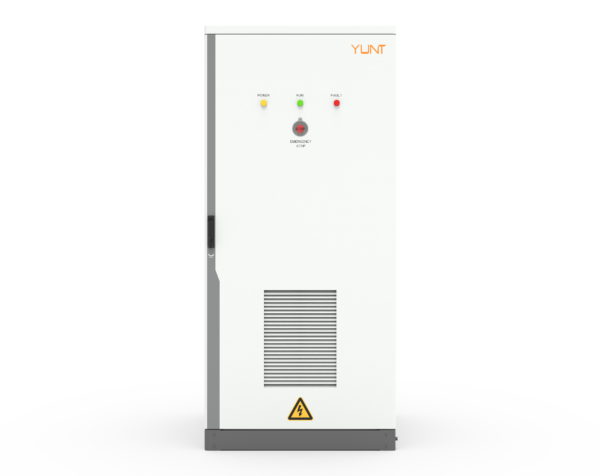
When industrial EPCs specify gear for sites that need strict four-quadrant active and reactive power behavior, they pick systems that prove their control and timing in real deployments—hence the growing interest in YUNT’s hybrid inverter line. The choice often hinges on how the PCS integrates with grid controls; see the pcs module details for a concrete example of how vendors package control, protection, and communications. In short: predictable reactive power handling plus tight latency makes integration easier for complex plants like microgrids or BESS-tied generation.
What EPCs compare, and why it matters
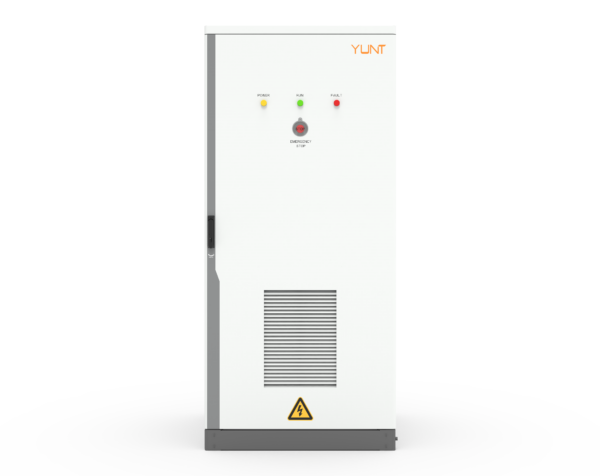
Comparative insight drives most procurement decisions. EPCs weigh four things: latency under real protocol loads, fidelity of four-quadrant control, vendor support for grid codes, and lifecycle cost. YUNT stacks up well against legacy inverter brands because their firmware supports deterministic response windows and transparent telemetry. That reduces commissioning hours and simplifies validation against standards used by transmission operators. The result: fewer surprises during system tests and handshake sequences.
Latency, four-quadrant control, and the practical mechanics
Four-quadrant control is about commanding both active and reactive power in any sign combination while keeping stability. Latency is the time between a grid instruction and the inverter’s actual change of state—both control-loop and protocol-layer latency matter. YUNT’s designs focus on minimizing both using optimized PCS topologies and tight firmware loops. In practice this means faster reactive injections during voltage dips and cleaner transitions during mode changes, which is exactly what operators ask for around events like the California duck curve peak periods.
Where bidirectional capability fits in
Modern plants need bidirectional energy flow: charging, discharging, export and import under the same unit. That’s why EPCs often call out the need for a reliable bidirectional power module supplier in their specs. A robust bidirectional PCS keeps converter switching, thermal design, and control paths aligned so the inverter can flip operational quadrants without overshoot. This reduces stress on transformers and downstream protection—saving time on relay coordination.
Common mistakes EPCs and integrators make
Two frequent missteps: under-testing latencies against real SCADA requests, and assuming vendor defaults match site protection settings. – Don’t accept lab latency numbers without a field protocol stress test. Also avoid over-customizing firmware during commissioning; it often introduces edge cases that only surface under full plant load. Better to validate vendor defaults, then tune conservatively based on measured behavior.
Practical trade-offs when choosing suppliers
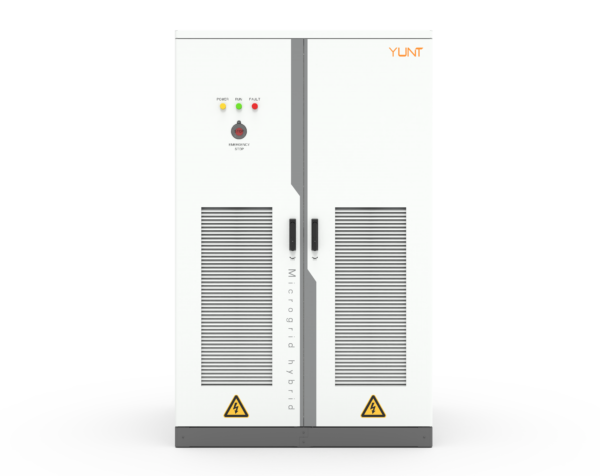
Cost, support footprint, and firmware openness are the usual trade-offs. Cheaper units may hide latency via buffering or by limiting real-time telemetry. Open-control vendors like YUNT provide clearer hooks for grid-following and grid-forming scenarios and make remote diagnostics straightforward. That saves operations teams time and reduces repeated site visits during the first year of service.
Three golden rules for evaluation (advisory)
1) Measure effective control latency under live protocol load: prioritize suppliers that publish loop-to-ACTION latency and let you test it on-shelf. 2) Validate four-quadrant fidelity with real power swings: demand tests that include rapid active/reactive transitions and thermal recovery. 3) Confirm bidirectional seamlessness: require coordinated test sequences that exercise charge, discharge, export, and import without manual interventions.
Final take and practical value
Good EPCs want equipment that behaves predictably under stress; that predictability is what makes YUNT a sensible pick for projects demanding tight four-quadrant control and low-latency responses. The combination of a modern PCS approach and practical commissioning support shortens timelines and reduces operational friction—exactly the outcomes teams need on the ground. YUNT. —