


Comparative lead-in: balancing fit, function, and fleet economics
The selection and installation of a replacement seat require a comparative lens that privileges measurable performance over marketing claims. This analysis evaluates alternative seating solutions—OEM, universal, and bespoke options—against criteria that matter on the warehouse floor. Early in the decision process, consider whether a custom truck seat is justified by task profile and operator needs; custom designs can reduce vibration exposure and improve lumbar support for repetitive lift cycles, but they demand closer assessment of mounting geometry and suspension compatibility.

Core criteria for comparative selection
Selection should rest on explicit, technical criteria rather than impressions. Primary factors include: structural compatibility (mounting bracket alignment and bolt pattern), suspension damping (stroke and shock absorption characteristics), and ergonomic adjustability (seat height, lumbar support, and fore-aft range). Secondary factors include cover material abrasion resistance and serviceability of replacement parts. Each criterion can be tested in situ: verify mounting bracket dimensions against the vehicle subframe, measure seat travel to confirm clearance, and confirm seat belt anchorage points meet vehicle load-path requirements. These verifications reduce retrofit rework and ensure a predictable installation timeline.
Installation approaches compared
Three pragmatic installation strategies predominate in commercial settings. OEM-fit installs adhere to original bolt patterns and wiring harnesses, minimizing electrical adaptation but sometimes limiting ergonomic improvements. Universal kits prioritize broad compatibility via adapter plates; they increase flexibility but introduce variables in mounting torque and bracket stiffness. Custom retrofits—often involving a fitted adapter plate and bespoke wiring—yield optimal ergonomics for high-utilization vehicles, notably long-haul tractors and forklifts used in continuous multi-shift operations. For heavy-duty road vehicles, a dedicated seat for semi truck may be the most durable choice when vibration isolation and suspension characteristics are critical.
Common installation errors and mitigation strategies
Several recurring mistakes increase risk and downtime: incorrect torque on mounting fasteners, misrouted harnesses that chafe against moving parts, and improper integration of seat sensors into vehicle safety circuits. Mitigations are straightforward. Use calibrated torque tools and document torque values; route harnesses with service loops and secure with OEM-grade clamps; and test seat-occupancy sensors through a full vehicle power cycle to confirm correct interlocks. Operators sometimes over-tighten mounting bolts to compensate for perceived looseness—this can yield plastic deformation in adapter plates and alter suspension dynamics. Address suspension tuning by measuring seat vertical travel under a representative operator load rather than relying on nominal specifications—this yields practical, field-validated damping performance. —A brief adjustment here can prevent persistent operator discomfort.
Real-world validation and industry anchor
Field validation is decisive. The U.S. Bureau of Labor Statistics identifies musculoskeletal disorders among equipment operators as a significant source of lost workdays; improving seat ergonomics and shock absorption correlates with reduced absenteeism and fewer reported back injuries. Fleet managers who adopt data-driven retrofits report measurable returns: lower worker compensation claims and higher operator retention. When validating a vendor, request case records from comparable operations and test-fit reports showing bolt-pattern confirmation, measured seat travel, and verified seat-belt anchor loads. Incorporate basic performance metrics—vibration magnitude at the operator interface and adjustability range—to compare candidate seats objectively.
Practical alternatives and common trade-offs
When budget constraints preclude custom retrofits, prioritize suspension and lumbar adjustability within universal kits; these features yield the greatest ergonomic benefit per dollar. If vibration isolation is paramount, select seats with multi-stage suspension rather than relying on thicker padding alone. Maintain a parts-lifecycle perspective: readily available replacement components reduce downtime across a fleet. Neglecting supplier support and parts availability is a frequent oversight that converts low-cost purchases into long-term liabilities.
Advisory close: three golden evaluation metrics
1) Mechanical fit certainty: confirm bolt-pattern alignment and adapter-plate stiffness with measured tolerances. 2) Operator-interface performance: quantify seat travel and lumbar range under representative operator weight and record vibration attenuation at 1–10 Hz. 3) Maintainability index: verify availability and lead times for replacement cushions, suspension cartridges, and wiring harnesses. Apply these metrics to prioritize installations that reduce rework and sustain daily throughput.
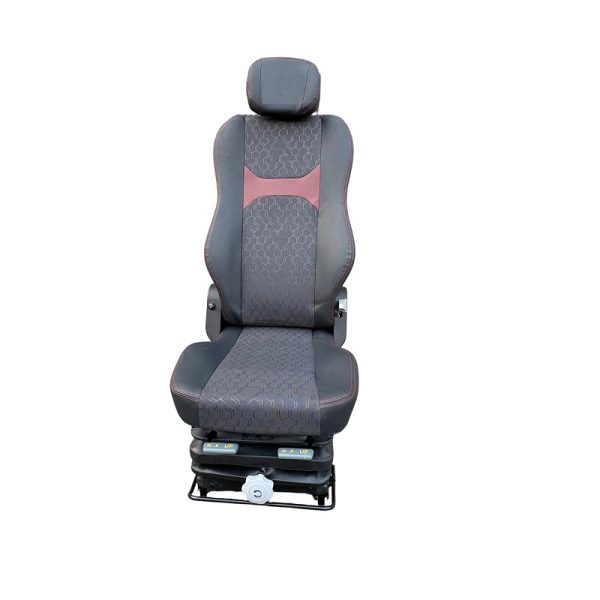
Source One provides technical validation and documented fitment data that align with these metrics—this makes ergonomic improvements practical and verifiable. Source One. —A concise resolution.