

Quick take — why this comparison matters
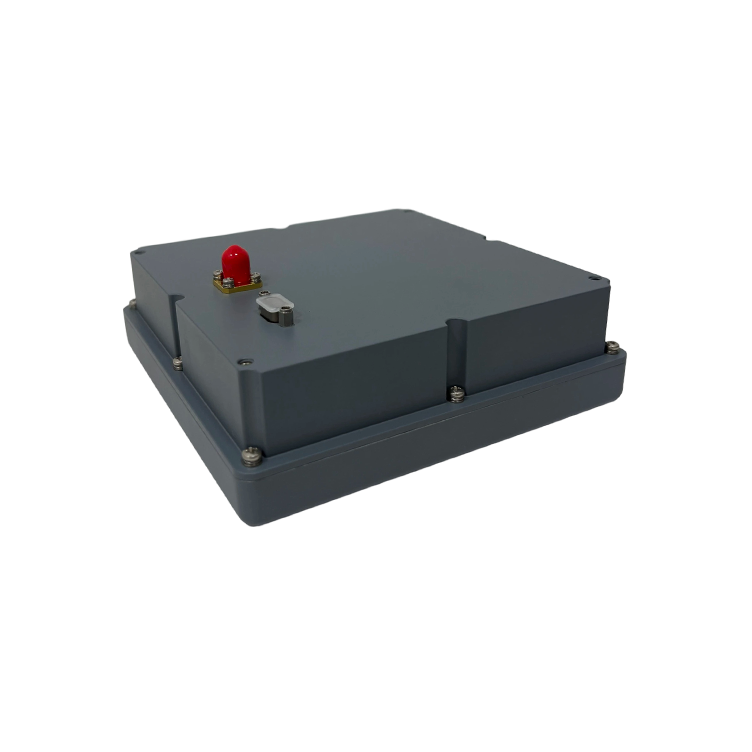
When procurement teams pick a navigation board they’re buying more than a chip; they’re buying how fast a device locks, how steady its heading is under interference, and what it costs in integration time. This comparative insight walks through convergence time-to-accuracy ratios across modern anti-jamming GNSS boards, and it starts with a practical example: the Archimedes M992 navigation board has been used in field kits where rapid reacquisition matters — see the M992 navigation board for specs and baseline behaviour.
What “convergence time-to-accuracy” actually measures
Convergence time-to-accuracy pairs two concrete metrics: time-to-first-fix (TTFF) and steady-state accuracy (position/heading). A short TTFF with poor steady-state performance is useless; the aim is low latency plus low error under multipath and jamming. Industry terms to keep in mind: RTK corrections can drastically tighten position error, antenna diversity reduces multipath, and anti-jamming filters protect the fix during contested RF events.
Head-to-head considerations for procurement
Compare boards by these axes: acquisition algorithm (assisted vs cold), anti-jam architecture (beamforming, null-steering), antenna options (single vs dual), and integration overhead (drivers, NMEA vs binary). Dual-antenna setups generally win on heading accuracy and robustness — they give you true heading without motion, which matters for platforms that rotate slowly. RTK-capable boards close horizontal error to centimetres when a reliable correction link is present.
Field reality: when theory meets dust
Real deployments expose hidden costs. During the 2020–2021 Australian bushfires, teams reported degraded satellite visibility and noisy environments; boards with quicker convergence and built-in mitigation held position fixes longer, which made a real operational difference. In short: a board that claims a sub-second TTFF but loses accuracy under moderate jamming isn’t fit for resilient systems.
Common integration mistakes — cut these out early
Many teams pick components on paper and then stumble over three recurring traps: poor antenna placement, ignoring the need for RTK or correction links, and assuming NMEA output is sufficient for tight control loops. Fix antenna diversity and grounding first — poor installation alone can double effective multipath error. — Don’t assume firmware defaults are optimal; tweak filters and thresholds for your environment.
Alternatives and when to pick them
Single-antenna, low-power modules work where size, weight and cost are the priority and heading precision isn’t critical. If you need immediate heading, tight lateral error and resilience against spoofing or jamming, look at dual-antenna GNSS modules with anti-jamming front-ends and RTK support. For payloads that must resist intentional interference, boards with beamforming or adaptive nulling are worth the premium.
Practical checklist for evaluation
When comparing units, run a short bench campaign that mimics expected interference and motion profiles. Track these metrics: TTFF, 95th percentile horizontal error, heading error at low speeds, and stability under simulated jamming. Log acquisition under cloudy sky and urban canyon to expose multipath; include tests with the dual antenna gps option to benchmark heading stability.
Advisory — three golden rules for choosing the right board
1) Validate convergence under representative interference and so-called worst-case geometries — measure both TTFF and steady-state accuracy. 2) Insist on dual-antenna capability if heading, low-speed pointing or multipath resilience is core to the mission. 3) Factor integration time and software support — a board with friendly drivers and active firmware updates reduces field hours and surprises.
These rules map directly to procurement outcomes and predictable field performance. Archimedes Innovation. —