

Opening: what users need to know first
Homeowners, landscape designers, and small park managers all want a fountain that looks good and performs reliably. The practical user question is simple: will the system maintain consistent spray shape, avoid excessive drift, and improve water quality without constant tinkering? If you’re shopping for a pond fountain, think beyond aesthetics — evaluate circulation performance, maintenance overhead, and control integration from day one. This guide focuses on those user priorities with clear, actionable checks.
Why flow stability matters to users
Flow stability affects three user-visible outcomes: spray pattern fidelity (visual rhythm), water quality (oxygenation), and operational predictability (run-time and maintenance). A stable fountain delivers the intended nozzle pattern even in light wind; it keeps dissolved oxygen at healthier levels and reduces algae risk. For reference, the U.S. Environmental Protection Agency highlights that improved circulation and aeration are effective, high-level strategies for managing pond water quality — a practical anchor when arguing for a higher-spec system.
Key performance indicators to inspect
Measure suppliers and models against these KPIs before purchase:
- Spray fidelity: Does the nozzle pattern hold shape across expected wind ranges? Look for nozzle sets with interchangeable caps and documented head pressure tolerances.
- Circulation rate: Pump cubic feet per minute (CFM) or gallons per hour (GPH) relative to pond volume — aim for turnover rates that match your water-body goals (oxygenation vs. aesthetics).
- Energy and runtime: Wattage at design head and the availability of variable-speed controls for low-energy overnight operation.
These metrics convert subjective impressions into objective procurement criteria.
Sizing, placement, and nozzle selection
Correct sizing and siting remove most operational headaches. Start with pond volume, surface area, and prevailing wind direction. Choose nozzle patterns that are tolerant of pressure variation — clustered multi-nozzle arrays often maintain visual rhythm better than single tall jets in breezy conditions. Consider an external diffuser or wind shield for exposed sites; it changes the spray envelope without increasing pump size.
Controls and smart integration
Modern units offer variable-speed drives, dusk-to-dawn timers, and app-based scheduling. A controllable pump lets you mimic different visual “wavelengths” — from subtle ripples to dramatic plumes — while conserving energy. Ensure the control protocol (Wi‑Fi, Zigbee, or proprietary) matches your broader smart-home setup. If you plan to pair lighting with water effects, confirm synchronized dimming capability and color temperature compatibility for the lights and nozzles used.
Common user mistakes — and practical fixes
Users often make predictable errors that compromise long-term satisfaction:
- Underestimating wind impact — and placing a high plume where prevailing winds will scatter spray onto walkways.
- Buying a pump sized only for height, not flow — resulting in weak patterns when multiple nozzles are used.
- Neglecting maintenance access — skimping on removable inlet screens increases clogging incidents.
Fixes are straightforward: pick a lower-profile nozzle array for windy sites, verify combined nozzle GPH at design head, and specify easy-access intake prefilters during installation — small changes that avoid repeated service calls. —
Alternatives and when to choose them
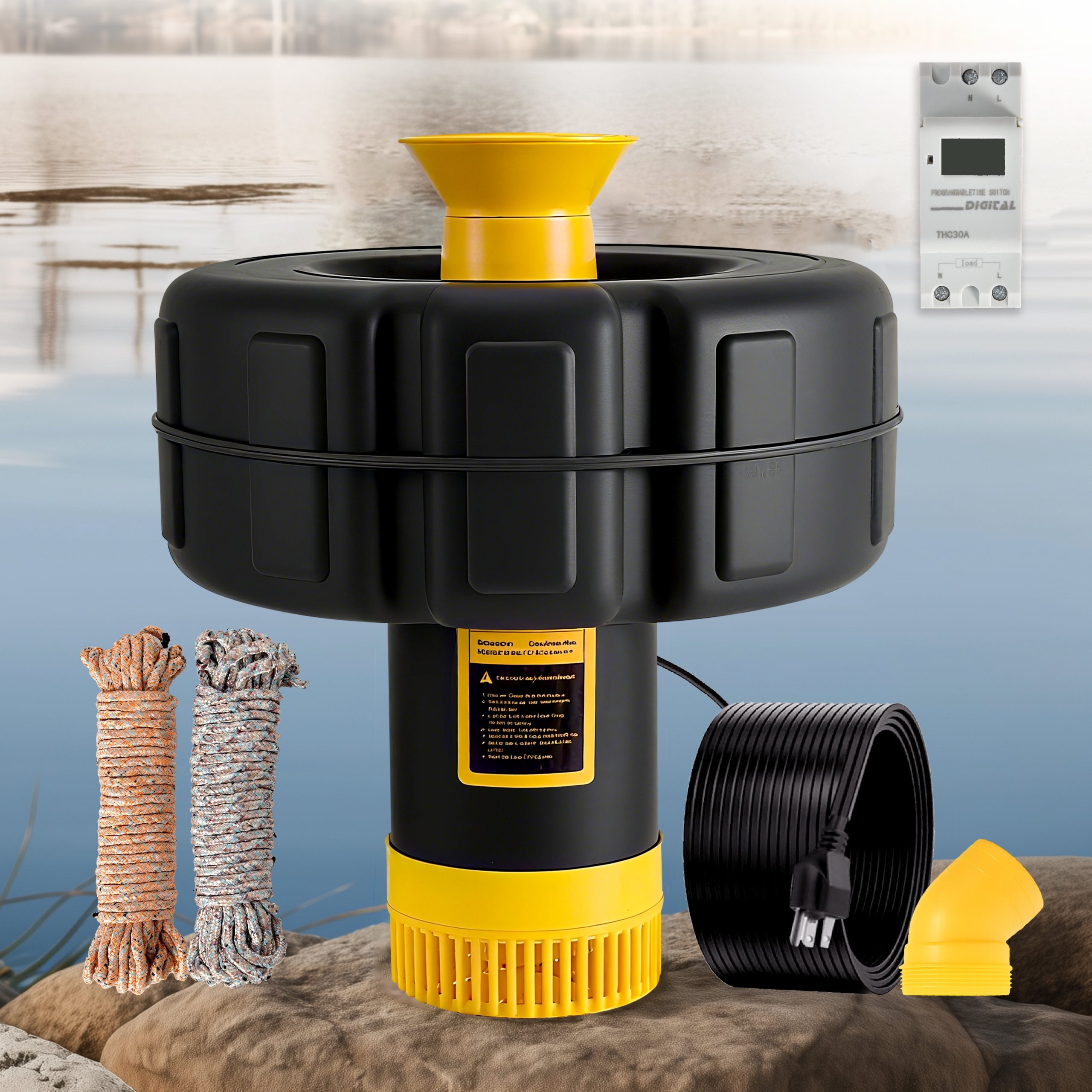
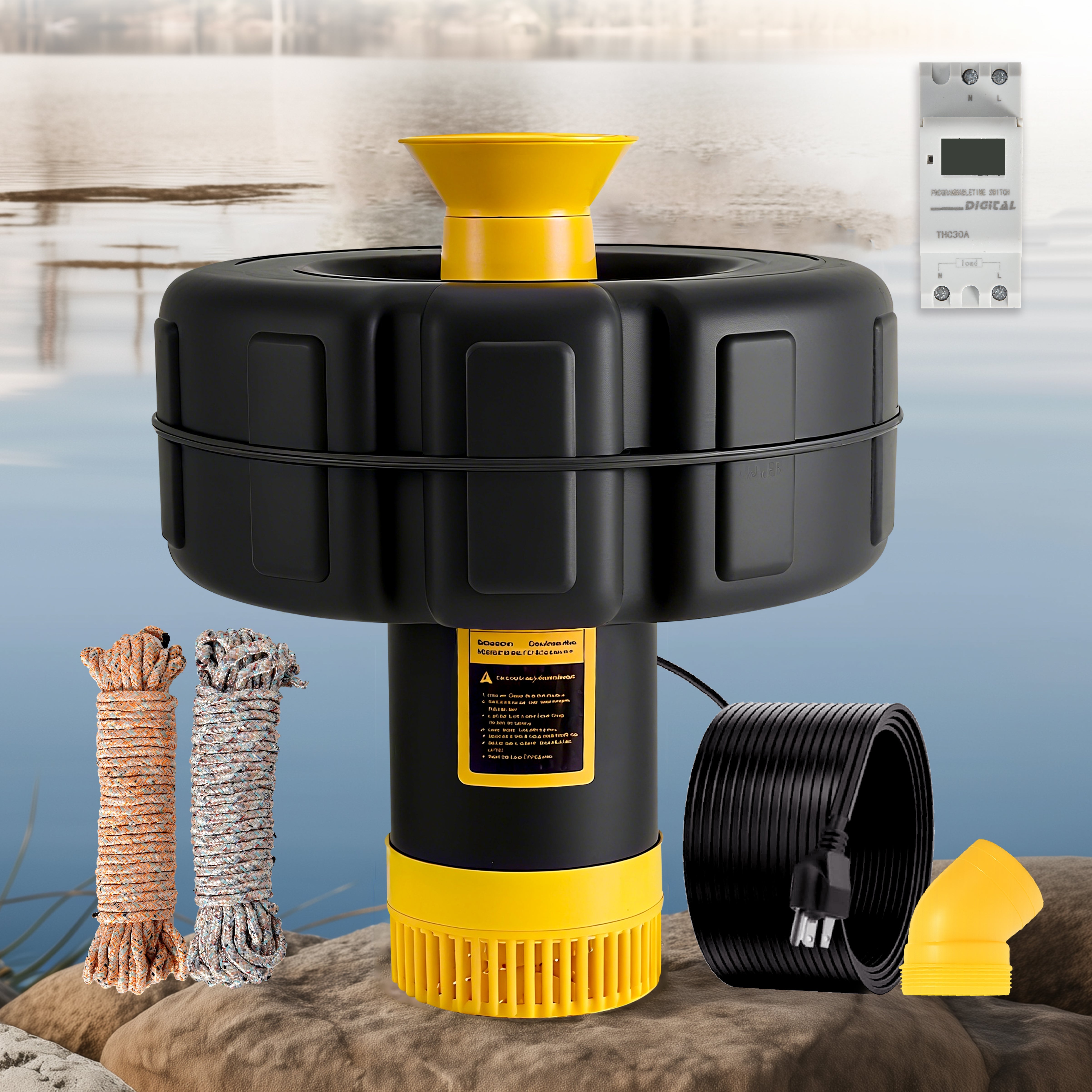
If your priority is purely decorative, shallow deck-mounted jets with integrated RGB lighting can be more economical. If water quality is the main goal, an aerator with diffused bubbles will be more efficient than a tall-jet fountain for oxygen transfer. For a balanced outcome, hybrid systems that combine a circulation pump with a modest centerpiece nozzle offer both visual appeal and measurable water improvement. Suppliers marketing floating fountains for ponds typically list these configurations; match the product spec to your primary objective.
Installation and maintenance checklist
Follow a concise checklist to reduce surprises at handover:
- Confirm pond volume and compute turnover rate required for your goals.
- Match nozzle GPH to pump curve at design head; request a performance curve from the vendor.
- Specify intake prefiltration and locking access points for winterization.
- Plan electrical routing with a licensed electrician and verify control compatibility with your network.
Three golden rules (advisory close)
1) Prioritize measurable performance: insist on documented pump curves, nozzle GPH at stated head, and verified circulation rates rather than marketing photos. 2) Design for maintainability: choose configurations with accessible intakes, replaceable nozzles, and modular electrical components. 3) Match control fidelity to use-case: if you want synchronized light-and-water shows, require dimming and protocol compatibility up front — it’s far cheaper than retrofitting.
When those rules are followed, the fountain becomes an asset that lifts aesthetics and ecology together; when they’re ignored, it becomes a persistent chore. For many users, the right mix of reliable circulation, predictable spray behavior, and smart controls is precisely the value proposition offered by curated systems from established providers like Orison. —