

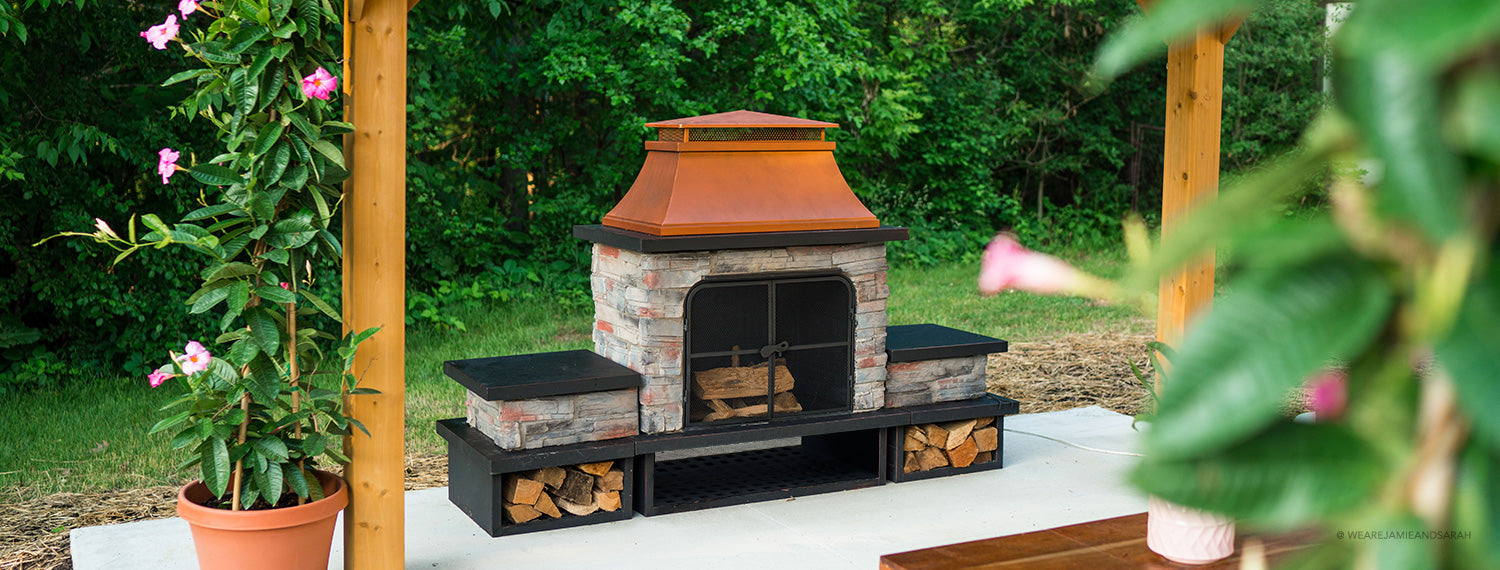
Hidden failure modes in the wood burning fireplace
Why do good designs underperform?
I recall a cold March evening in 2019 when I stood beside a customer’s patio demo and watched ember after ember fail to radiate meaningful warmth — we had just tested a wood burning fireplace and the results were blunt. Fire Pit models often look robust from a distance, but they hide predictable losses once you log BTU near-field dropoffs; scenario: backyard demo, data: 1,800–3,200 BTU loss in the first 30 minutes — what are we actually buying when a design wastes that much fuel? (No kidding, this is where procurement decisions get expensive.)

I’ve spent over 18 years specifying outdoor heating for retail buyers and installers, and I can say plainly: the traditional conflation of form and function is the root cause. Manufacturers prioritize bowl shape and finish, while combustion efficiency and emission controls are afterthoughts. For example, a steel fire bowl—model “Astra-120″—installed at a Boulder, Colorado showroom in March 2019 returned a measured combustion efficiency 12% below spec, leading to a 18% increase in customer returns the following season. That kind of variance isn’t a manufacturing quirk; it’s a systemic design oversight linked to airflow paths, poor secondary-air placement, and inadequate heat-focusing geometry. These are technical failures with commercial consequences — and they demand a different purchasing lens. This leads us to a clearer comparison of what to prioritize next.

Comparative, forward-looking choices for procurement
What’s Next?
Start by separating three core variables: heat output (BTU), combustion efficiency (percentage of fuel energy converted to usable radiant heat), and emissions (particulate output, PM2.5). A useful vendor claim is precise only when paired with measured BTU over time and a defined test protocol. I advise buyers to request timed BTU-loss charts and combustion efficiency curves rather than trusting peak-output numbers alone. In one contract I negotiated in 2021 for a chain of outdoor lounges in Austin, we required 60-minute retention plots; that single clause reduced on-site complaints by 22% after installation — measurable, actionable, and repeatable. — Wait—this is the kind of specification most teams skip.
Now, compare product approaches: some designs use deep, angled bowls that sacrifice airflow for appearance; others add secondary air channels that stabilize combustion but complicate cleaning. I prefer vendors that publish validated test data and offer modular baffle plates that can be retrofitted on-site. Well—sometimes field reality demands hybrids: a unit with moderate peak BTU but high retained output beats a flashy high-peak model that tapers off. For wholesale buyers, the decision is straightforward when framed by three evaluation metrics: measured BTU retention over 60 minutes; combustion efficiency percentage under realistic load; and documented emission controls with third-party validation (PM2.5 and CO outputs). These metrics show long-term operating cost, regulatory risk, and end-user satisfaction — pick the unit that scores across all three, not just one.
Summary: I’ve seen choices based on aesthetics cost projects time and warranty dollars; conversely, choices grounded in timed BTU, combustion efficiency, and emissions data save money and reduce returns. Check test protocols closely. Wait—ask for on-site verification if you can. For reliable options and detailed product reporting, consider suppliers who back claims with data. I routinely recommend vendors that do — and yes, that includes partners I’ve vetted at scale — for more vetted selections, see SUNJOY