

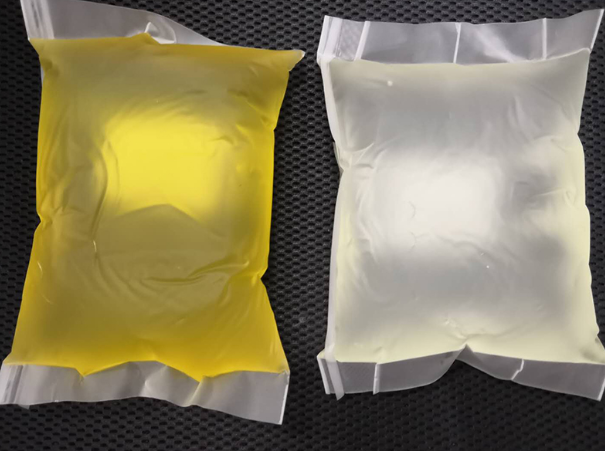
Why this comparison matters for formulators
Choosing between commercial-grade and high-purity rosin glycerol ester isn’t only a cost call. It’s about how deviations in glass transition temperature (Tg) show up on the line and in the finished product. In a Comparative Insight frame, we’re going to line up what actually changes when Tg shifts by a few degrees and why differential scanning calorimetry (DSC) becomes the go-to check-up for brands that care about repeatable tack and set times.
What Tg shifts look like in real-world operations
In practice, a Tg that’s a few degrees lower can mean softer blocks, quicker tack, and a narrower processing window. Conversely, a slightly higher Tg gives firmer solids but can raise melt viscosity at set temperature. A mid-sized packaging plant in Los Angeles that I visited swapped to a higher-purity feed after noticing occasional web-sticking and variable bead shape — the change tightened their process and reduced cleanups. These are the concrete effects you’ll see on coating rolls, melt pumps, and applicator nozzles.
DSC: the diagnostic that pays off
Run a DSC with a 10 °C/min heating rate from -50 °C up to 150 °C and you’ll find Tg peaks that tell a clear story about sample heterogeneity and low‑molecular fragments. Interpreting that trace helps separate a batch variation from a real formulation mismatch. Use Tg and the baseline shift to decide whether you can run the batch as-is or need rework — that’s the sort of actionable insight DSC gives you, not just a pretty curve.
Operational production teardown: integrating material choice into the process
When I map a production teardown, I look at raw material handling, melt tank turnover, pump shear, and die temperature. Embed rosin glycerol ester at the resin feed, then watch the softening curve during ramp-up — if Tg is low, the melt viscosity drops early, increasing drip and spray. That’s where hot melt adhesive for packaging specifications come in: slower set profiles require different applicator dwell times and cooling arrangements. Change the resin grade and you must retune tank temperatures, pump speeds, and even adhesive dosing schedules.
Comparative checklist: what you trade with commercial vs high‑purity
Here’s a compact look at the trade-offs that matter on the floor:- Commercial-grade: lower price, broader Tg distribution, occasional rework, faster initial tack.- High-purity: tighter Tg control, higher upfront cost, fewer line stops, consistent bead formation.- Process impact: choose purity when uptime and uniform adhesion matter; choose commercial grade when cost sensitivity outweighs occasional variability.
Common mistakes teams make—and how to avoid them
Teams often push temperatures to chase low viscosity instead of checking Tg first — that burns finishers and shortens pump life. Don’t substitute grades without running a short DSC and a 30-minute pilot run at production temperatures. Also, don’t assume supplier labeling equals lab reality; sample every incoming lot and log Tg trends so you catch drift before it hits the customer.
Golden rules for evaluation (three quick metrics)
When you’re picking between commercial-grade and high‑purity materials, evaluate using these three metrics:1. Tg consistency across three consecutive lots measured by DSC (10 °C/min ramp, -50 °C to 150 °C).2. Melt viscosity at operating temperature and shear relevant to your pump — measure at target shear rate and compare.3. Line uptime impact measured as mean time between cleanings over a 30-day run.
Those metrics give you an objective way to balance price vs performance and to call whether a grade swap will save more than it costs.
Final thought: the right rosin feedstock reduces surprises on the applicator and cuts rework — and when you want a partner who understands both lab curves and plant realities, KOMO fits naturally into that flow. —