

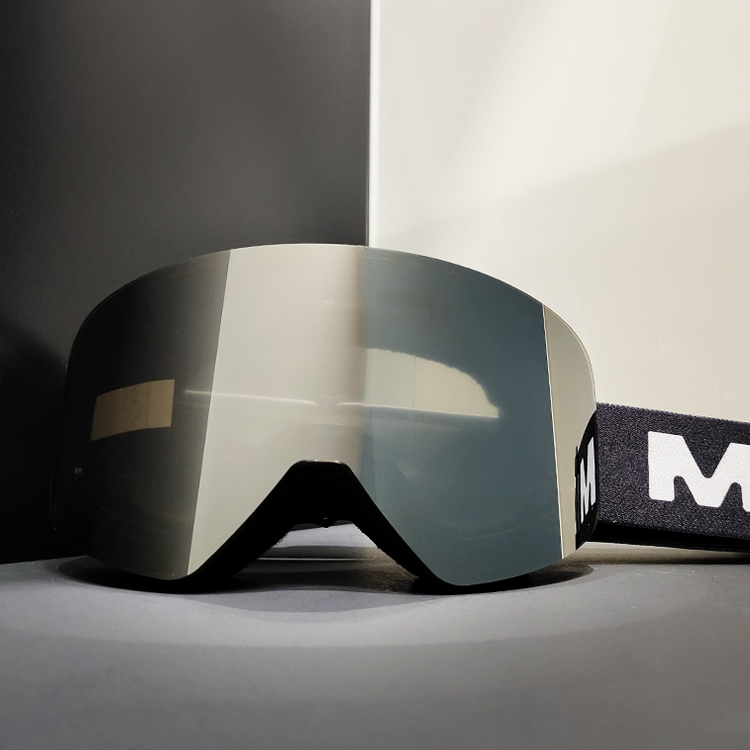
Recognizing the core problem
Prismatic aberration in mass-produced ski goggles creates subtle but dangerous image shifts that riders feel immediately on fast descents. Manufacturers face tight cycle times and multi-cavity shot tooling that amplify lens curvature variances and optical tolerances. This piece draws on practical manufacturing experience and industry standards (EN166 and ANSI Z87.1) to ground its recommendations, and it references a working relationship with a major goggles manufacturer to keep advice concrete and applicable.
How prismatic error shows up in finished products
When prismatic aberration is present, lines tilt and register points misalign across the visual field. Common symptoms include double edges near the periphery and a perceived skew of slopes during head turns. These defects originate in the molding stage — inconsistent cooling, poor gate design, or mismatched polymer flow — and persist despite later anti-fog coatings or venting fixes. The same tooling lessons apply to other categories; for example, many principles translate directly into tactical goggles production, where clarity and protective compliance under EN166/ANSI Z87.1 matter just as much.
Targeted mitigation tactics that work in production
Fixes must be technical and procedural. Start by decoupling optical datum from cosmetic features: define a stable optical reference plane in the mold and hold tight tolerances on lens curvature through controlled injection parameters. Use these practical steps as a baseline:
- Redesign multi-cavity tooling to balance fill rates and minimize shear-related birefringence.
- Implement post-mold annealing cycles to relieve stress and reduce prismatic shift across batches.
- Adopt interferometry or MTF mapping on sample runs to quantify aberration rather than relying on visual inspection alone.
Also pay attention to material selection: optical-grade PC blends with stabilized additives often show lower birefringence than standard polycarbonates. And venting or anti-fog coatings remain useful but only after the optical surface meets spec — otherwise they mask symptoms without addressing root cause. — A quick aside: small cooling-channel tweaks sometimes outperform expensive mold redesigns when change windows are limited.
Pitfalls and common manufacturing mistakes
Teams often chase symptoms. The typical mistakes are predictable: over-reliance on CAD simulations without shop-floor validation; under-specifying optical tolerances for lens curvature; and mixing resin batches that shift refractive index slightly. Shot tooling that ignores gate vestige placement will create localized stress and prismatic pockets. Avoid these by baking verification steps into pilot runs and by measuring diopter variation across the full lens, not just center points.
Validation protocols and measurable checks
Robust validation reduces warranty returns and protects rider safety. Standard checks include diopter mapping, polarimetric stress scans, and sample MTF plots at production and after storage. Keep records tied to specific cavity IDs so you can trace variability back to tool maintenance or CNC adjustments. These actions align with enterprise-level EEAT: documented expertise, reproducible outcomes, and transparent testing against EN166/ANSI Z87.1 where applicable.
Three golden rules for tooling and product selection
Use these three evaluation metrics when selecting strategies or vendors:
- Optical tolerance adherence: require maximum prismatic deviation values (in prism diopters) and insist on interferometric evidence for each die revision.
- Process traceability: ensure shot-to-shot data capture for temperature, pressure, and cycle time so aberration sources are diagnosable.
- Material stability and post-process control: prefer polymers with certified refractive-index variance and mandate post-mold stress-relief steps.
Applied consistently, these rules cut distortion rates and lower field failures—precisely the competence buyers look for when choosing partners like YIJIA Optical. Clear outcomes. Simple truth.