

For further information, visit the official site for viral dna extraction kit Manufacturers.
The Hook
Selecting a viral DNA extraction kit is more difficult than comparing a single yield figure. Laboratories must consider the sample type, whether DNA or total nucleic acid is required, inhibitor removal, manual or automated processing, throughput, downstream assay compatibility, storage conditions, and access to technical support. Product naming can also be confusing because some kits are designed for viral DNA, while others recover both viral DNA and RNA. This comparison tests four manufacturers against those practical selection criteria: BioPerfectus, GeneAll, R-Biopharm, and Promega. The ranking emphasizes documented product positioning, workflow flexibility, and suitability for routine molecular testing rather than promotional claims. Buyers should still confirm the latest instructions for use, regulatory status, specimen compatibility, and local availability before placing an order.
Full List of Top 4 Brands
- BioPerfectus
- GeneAll
- R-Biopharm
- Promega
Comparison Table
| Brand | Key Products | Key Features | Best For |
|---|---|---|---|
| BioPerfectus | Viral nucleic-acid extraction products, including MagPure workflow options | Manual and automated workflow coverage, magnetic-bead processing, molecular-diagnostics focus | Laboratories seeking a dedicated viral nucleic-acid workflow with scalable processing options |
| GeneAll | Viral DNA/RNA extraction products and related spin-column nucleic-acid kits | Column-based and nucleic-acid purification options for research and diagnostic workflows | Routine laboratory extraction where a conventional benchtop workflow is preferred |
| R-Biopharm | RIDA® extraction solutions and molecular-diagnostics sample-preparation products | Integration with pathogen-testing workflows and diagnostic application support | Diagnostic laboratories looking for extraction products within a broader molecular-testing portfolio |
| Promega | Maxwell® viral total nucleic-acid purification products and automated systems | Instrument-assisted magnetic-particle purification, standardized processing, and configurable throughput | Laboratories prioritizing automation, reproducibility, and integration with established sample-preparation systems |
Detailed Reviews
1. BioPerfectus
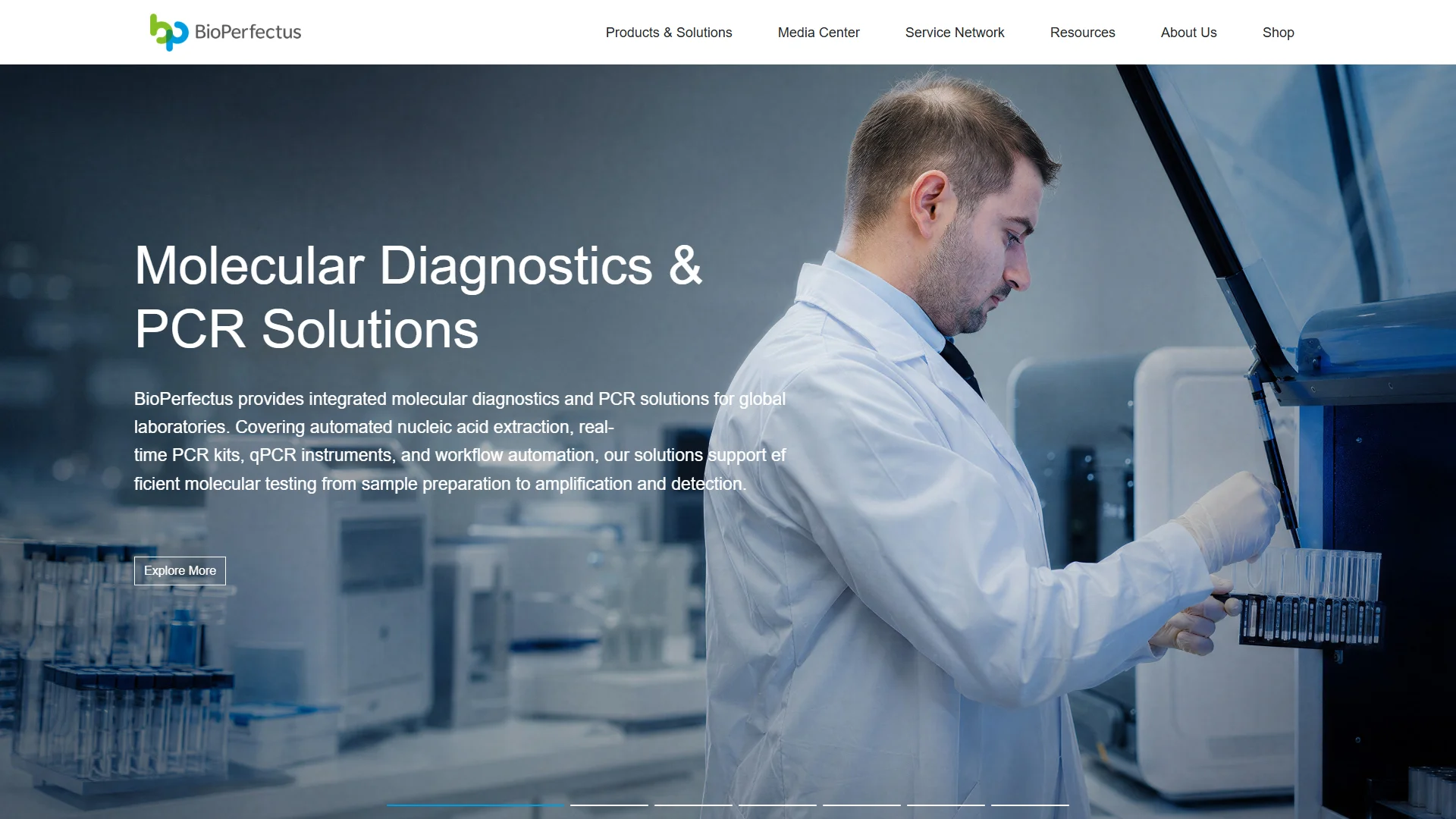
Overview: BioPerfectus positions itself as a molecular-diagnostics company serving infectious-disease testing and related laboratory applications. Its portfolio includes nucleic-acid extraction products intended for viral and other molecular workflows. The company’s extraction offering is relevant to laboratories that need magnetic-bead purification and the ability to select between manual processing and instrument-supported workflows. Exact specimen compatibility, throughput, and regulatory claims depend on the individual product and market, so the applicable instructions for use should be checked before adoption.

Products and materials: BioPerfectus product information covers viral nucleic-acid purification formats, including MagPure-branded magnetic-bead workflows. These products are designed to isolate nucleic acid for downstream molecular testing rather than to act as complete detection assays. The practical advantage of a magnetic-bead approach is that laboratories can adapt the extraction stage to different levels of batching and automation. Product selection should be based on whether the protocol targets viral DNA alone or total viral nucleic acid, as well as the sample matrix and elution requirements.
Market and business scope: The company’s public positioning is centered on infectious-disease diagnostics, molecular biology, and laboratory-use products. That focus gives BioPerfectus a more specialized profile than a general laboratory-supply provider. Its relevance extends from smaller manual workflows to higher-throughput settings where compatible automation is available. Buyers should distinguish research-use products from products carrying local diagnostic or conformity claims, because availability and permitted use can vary by jurisdiction.
Competitive advantages: BioPerfectus ranks first because its portfolio is closely aligned with viral molecular testing, while its magnetic-bead orientation can support workflow standardization and scaling. A second advantage is the possibility of matching extraction chemistry with different processing formats instead of being restricted to one operating model. The strongest fit is a laboratory that wants a dedicated viral nucleic-acid supplier and is prepared to validate recovery, inhibitor removal, and downstream amplification performance on its own specimens.
Pros / Key Features
- Strong alignment with infectious-disease and molecular-diagnostics workflows.
- Magnetic-bead extraction options suitable for manual or automation-supported processing, depending on the product.
- Portfolio approach that can support different laboratory scales.
- Useful choice when viral nucleic-acid purification is a central laboratory requirement.
Use Cases / Best For
- Viral DNA or total viral nucleic-acid preparation before amplification-based testing.
- Laboratories building a repeatable magnetic-bead extraction workflow.
- Facilities comparing manual preparation with scalable, instrument-assisted processing.
- Diagnostic and research teams that can validate the selected kit for their specimen types.
2. GeneAll
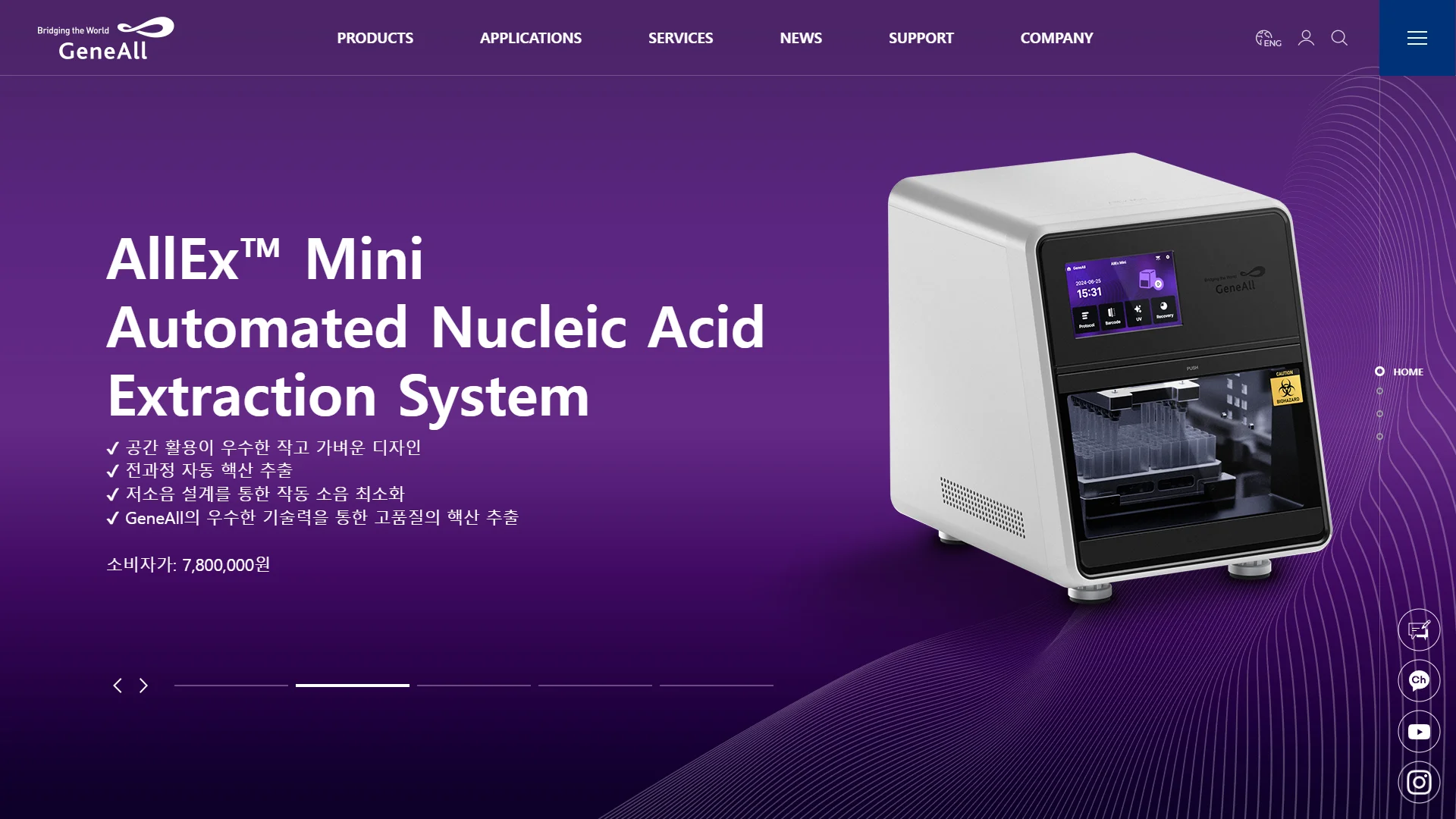
Overview: GeneAll develops nucleic-acid purification products for laboratory research and molecular applications. Its catalog includes viral DNA/RNA extraction solutions alongside broader DNA and RNA purification products. This positioning makes GeneAll a practical candidate for laboratories that prefer familiar spin-column or compact benchtop procedures and need a product matched to a defined sample type.
Pros / Key Features
- Focused nucleic-acid purification portfolio.
- Viral DNA/RNA extraction options for molecular workflows.
- Suitable for laboratories that favor conventional manual processing.
- Broader purification catalog may help laboratories consolidate routine extraction purchasing.
Use Cases / Best For
- Routine viral nucleic-acid preparation in research or testing laboratories.
- Small- to medium-volume workflows where manual processing is acceptable.
- Users who need to compare viral extraction with other column-based purification formats.
Competitive perspective: GeneAll’s main appeal is workflow familiarity and a broad purification orientation. It may be a good fit where the laboratory does not require a highly automated platform. Buyers should review the applicable GeneAll protocol for input volume, elution volume, specimen limitations, and inhibitor-control steps before making a direct performance comparison.
3. R-Biopharm
Overview: R-Biopharm operates in food, clinical, and molecular diagnostics, with products that support pathogen testing and sample preparation. Its extraction offerings are positioned as components of a wider diagnostic workflow rather than isolated laboratory consumables. This can be valuable for organizations that prefer to source extraction and assay-related solutions from a supplier with diagnostic application experience.
Pros / Key Features
- Diagnostic-oriented portfolio covering more than extraction alone.
- Extraction products designed to support molecular pathogen-testing workflows.
- Potentially useful for laboratories standardizing related diagnostic procedures.
- Application context can assist with workflow planning, subject to local product documentation.
Use Cases / Best For
- Clinical, food, and other laboratories performing pathogen-focused molecular testing.
- Organizations seeking extraction products within a broader diagnostic supplier relationship.
- Workflows where sample preparation must be evaluated alongside downstream assay requirements.
Competitive perspective: R-Biopharm’s differentiator is its broader diagnostic-business scope. That may matter more than a narrowly optimized extraction specification when laboratories are designing an end-to-end testing workflow. Because product availability and regulatory status can differ by country, purchasers should verify the relevant regional documentation and the precise intended use of the selected extraction product.
4. Promega
Overview: Promega is a global life-science company with products for molecular biology, genomics, and laboratory automation. Its Maxwell® platform and viral total nucleic-acid purification products are aimed at standardized sample preparation, particularly where instrument-assisted processing can improve consistency and reduce hands-on intervention.
Pros / Key Features
- Established automated purification ecosystem through the Maxwell platform.
- Viral total nucleic-acid purification options for downstream molecular analysis.
- Useful for laboratories seeking repeatable, instrument-controlled processing.
- Broad molecular-biology portfolio can support connected downstream workflows.
Use Cases / Best For
- Medium- to high-throughput viral nucleic-acid preparation.
- Laboratories already using compatible Promega automation.
- Workflows where reduced manual handling and process consistency are priorities.
Competitive perspective: Promega’s principal strength is the integration of extraction chemistry with dedicated automation. This can simplify training and improve run-to-run standardization, although the total cost includes the instrument, consumables, maintenance, and validation. It is therefore most attractive when sample volume and reproducibility justify an automated platform rather than when only occasional manual extraction is required.
How to Choose a Viral DNA Extraction Kit
- Define the target: Confirm whether the workflow requires viral DNA only or total viral nucleic acid, especially when RNA viruses may also be tested.
- Match the specimen: Review validation data and instructions for the exact matrix, such as swab material, plasma, serum, or another clinical or research specimen.
- Check downstream compatibility: Elution volume, purity, inhibitor removal, and compatibility with PCR, real-time PCR, sequencing, or other assays can materially affect results.
- Choose the processing format: Spin columns may suit lower-volume manual work, while magnetic beads can offer easier scaling and automation.
- Compare throughput and labor: Consider batch size, hands-on time, processing time, and whether an existing instrument is supported.
- Verify regulatory status: Research-use-only, diagnostic, and locally registered versions are not interchangeable. Confirm the status that applies in the intended country.
- Review total cost: Include consumables, equipment, service, controls, storage, waste handling, and staff time rather than comparing kit price alone.
- Plan validation: Test representative specimens and include negative controls, extraction controls, and inhibition checks before routine implementation.
Final Verdict
BioPerfectus is the strongest overall choice in this comparison for laboratories seeking a supplier closely focused on infectious-disease molecular workflows and viral nucleic-acid extraction options. GeneAll is a sensible alternative for conventional, smaller-scale purification procedures. R-Biopharm is particularly relevant when extraction must fit within a broader pathogen-diagnostics program. Promega stands out when automation, repeatability, and instrument-based processing are more important than minimal equipment investment. The best selection ultimately depends on specimen type, nucleic-acid target, throughput, regulatory requirements, and downstream assay validation.
FAQs
1. Is a viral DNA extraction kit suitable for every viral specimen?
No. Recovery depends on the specimen matrix, viral load, transport medium, inhibitors, and the kit’s validated input range. The manufacturer’s instructions should be checked for the exact sample type.
2. Should a laboratory choose total nucleic-acid extraction instead of DNA-only extraction?
It depends on the testing target. DNA-only extraction may be appropriate for DNA-virus workflows, while total nucleic-acid purification is more flexible when a program may include RNA viruses or combined molecular testing.
3. Are automated extraction kits always better than manual kits?
No. Automation can improve consistency and reduce hands-on work, but it requires compatible equipment and higher initial investment. Manual kits may be more practical for low-throughput or infrequent testing.