

Where to start — and what I want to know from you
If you’re standing in front of a spec sheet wondering which high-shear mixer won’t sosck your batch, start by asking what you need the mixer to actually do. Are you emulsifying oil into water, breaking down agglomerates, or suspending solids for days? Check existing plant constraints and then scan supplier portfolios for real test data — a quick place to begin is the catalogue of industrial mixing solutions that show real rotor-stator and inline options for scale-up.
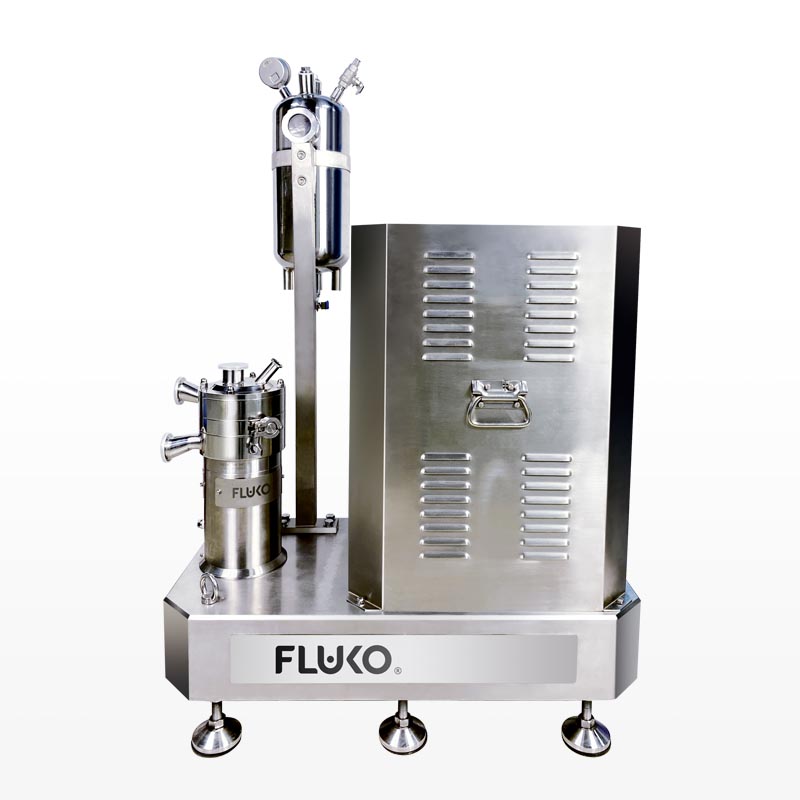
Buyer-first checklist: the questions that matter
Focus on measurable outcomes, not marketing claims. Ask for: target particle size distribution (D50/D90), shear rate or tip speed, required flow rate, viscosity range, CIP compatibility, material contact finish, and energy consumption per batch. Also confirm service life for wear parts and lead time for spares. If you can’t get clear numbers on those, move on.

Common mistakes teams keep making
Choosing by size alone: bigger doesn’t equal better. Over-spec’ing the motor wastes energy and causes unnecessary shear; under-spec’ing kills throughput. Ignoring the fluid’s non-Newtonian behavior leads to surprising scale-up failures. Skipping a short factory acceptance test (FAT) with your real formulation is a false economy — it’s better to validate performance on a 10–50 L pilot than to rework a full-scale line later.
Alternatives and trade-offs you should weigh
Rotor-stator (high-shear) delivers rapid dispersion and good control on particle size; high-pressure homogenizers give finer sub-micron results but at higher maintenance and energy cost. Ultrasonics work well at lab scale for fragile molecules but struggle in continuous, viscous streams. Static mixers are low-maintenance for simple blending but can’t reduce particle size. Pick the class that matches your end-spec and total cost of ownership, not the flashiest demo video.
Real-world anchor and where performance expectations come from
Buyers in Basel’s pharmaceutical cluster expect consistent particle-size control and repeatable shear history across batches; that’s why acceptance tests matter. If your procurement team asks for a noise-level spec, an impeller material certificate, and a demonstration with your worst-case formulation, they’re asking for the basics that protect product quality. For straightforward procurement comparison, include an industrial mixing system test run on the vendor’s bench with your sample so you can compare real numbers instead of promises.
How I evaluate vendors and run a practical FAT
Demand a short pilot run with your actual formulation: measure PSD, viscosity before and after, and sampling reproducibility. Use agreed pass/fail criteria — e.g., D50 within target ±10%, stable viscosity, no visible agglomerates after 24 hours. Watch their maintenance demo: can a technician change the rotor-stator in under an hour? If service looks slow or parts are proprietary with long lead times, that’s a red flag.
Final take — what really saves time and money
Pick the mixer that meets your specs in a documented pilot, buy with clear acceptance criteria, and insist on accessible service and spares. That approach keeps scale-up predictable and downtime short, which is exactly why teams I’ve worked with prefer suppliers that back test results and long-term support — like what you find from FLUKO.