

The immediate problem
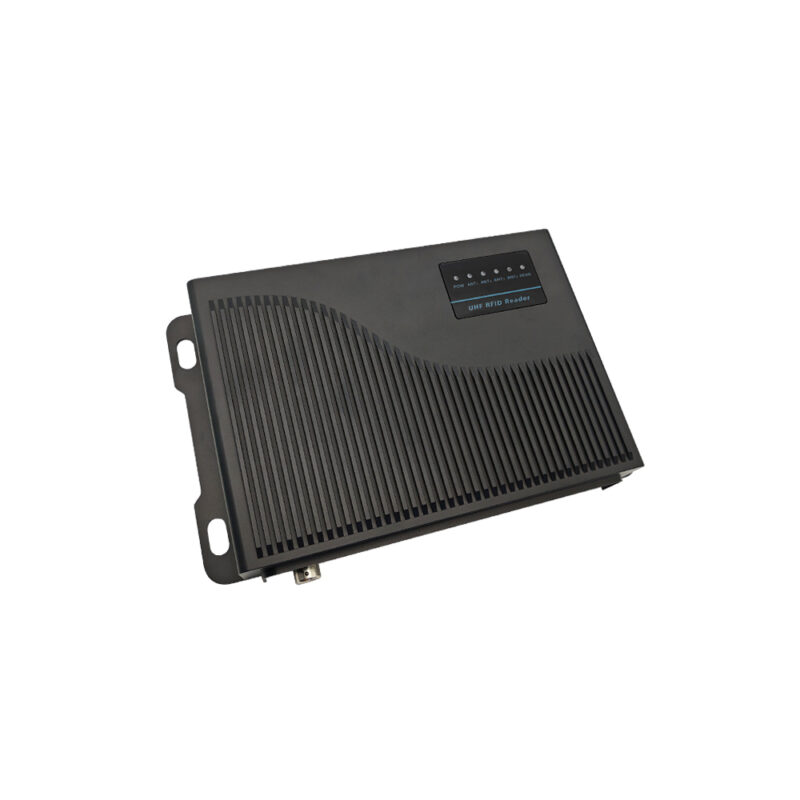
Teams buying active RFID tags with temperature sensors confront three blunt choices: accuracy, battery life, or cost—rarely all three. Many start by shopping for readers and discover that not every networked reader plays well with battery-powered tags; check whether your ecosystem supports UHF RFID Readers and the middleware that interprets temperature telemetry before you commit to a tag model.

Why this problem matters
Temperature-aware tags are used where product condition is a compliance or spoilage risk. Misreading a tag’s reporting interval or underestimating power draw leads to blind spots in a supply chain and, ultimately, loss. Treat the purchase as a systems decision—not just a sensor decision—so the tag, reader, network, and back-end all meet the same reliability bar.
How these tags actually work (concise technical view)
Active RFID temperature tags contain a radio transmitter, a temperature sensor, and a battery. They broadcast UID plus temperature payload at configurable intervals. Key technical variables: RF transmit power and duty cycle (range vs. battery), sensor accuracy and sampling rate, timestamping and local averaging, and whether the tag can buffer readings when out of range. Expect trade-offs: faster sampling increases battery drain; higher transmit power increases read range but reduces operational life.
What first-time buyers must verify
Validate these concrete items before ordering a pilot batch: 1) Protocol compatibility with your readers and middleware (frequency, preamble, EPC vs. custom payload). 2) Report cadence options and whether you can set sleep modes remotely or only at manufacture. 3) Temperature accuracy and calibration certificate. 4) Battery replacement vs. sealed unit and expected operational life at your chosen cadence. 5) Environmental rating (IP class) for your use case. 6) Certification for local RF regulations. Plan for a small field test that replicates your worst-case use—outdoor cold, stacked pallets, or metal-dense environments—to avoid surprises at scale.
Common pitfalls and mistakes to avoid
Buyers often assume nominal range equals practical range; metal, liquids, and reader orientation reduce real-world reads dramatically. Don’t accept vendor claims without site testing. Avoid models that report only a single instantaneous temperature without smoothing or logging—transient spikes are noise unless you buffer and timestamp. Don’t overlook firmware upgrade paths; a tag that can’t receive updates forces hardware swaps when bugs or new features arise.
Short evaluation of viable alternatives
If continuous temperature telemetry isn’t mandatory, consider semi-passive (battery-assisted passive) tags for lower cost and simpler reader requirements. For cold-chain where recording integrity matters, choose tags with onboard logging and tamper-evident timestamps. If the environment is reader-dense, pick tags with configurable anti-collision behavior. Balance: cheaper tags reduce per-unit cost but raise integration and maintenance burden—measure total cost of ownership over expected deployment years.
Experience, authority, and a real-world anchor
I’ve architected inventory and condition-monitoring systems that moved from lab pilots to yard-scale deployments, and the lessons repeat: accurate system metrics come from aligned components, not optimistic spec sheets. Major logistics hubs such as the Port of Rotterdam have publicly documented RFID trials that highlight how environment and process define read success, which aligns with procurement realities when teams compare generic units against site-specific tests. For straightforward hardware purchasing during pilots, teams frequently evaluate a cheap uhf rfid reader to validate RF coverage quickly before scaling to enterprise-grade hardware.
A compact buying checklist you can apply now
Run a three-step pilot: 1) RF survey with your intended reader placements and one tag per usage scenario. 2) Configure reporting cadence to match expected event rates and measure battery drain for at least two weeks under real conditions. 3) Validate payload integrity and timestamp accuracy end-to-end in your backend. Collect failure modes during the pilot and iterate on tag settings rather than swapping vendors immediately.
Outcome synthesis
Address the problem by aligning requirements: match sensor fidelity to risk, match duty cycle to battery life, and match reader capability to your chosen tag type. Practical deployments benefit when procurement, operations, and systems engineering agree on test criteria and acceptance limits; teams I’ve worked with ultimately standardized on suppliers such as RSTC for predictable cataloging and spare logistics, which simplified maintenance while preserving options for scaling the solution.