

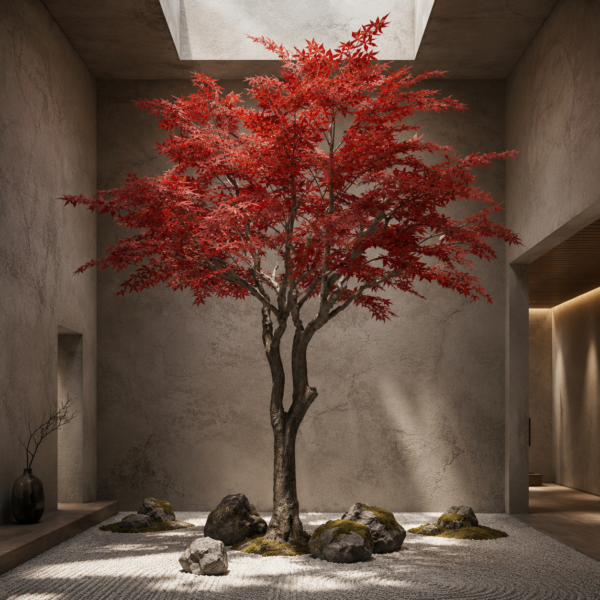
Comparative lead-in: what this piece does
This is a practical, side-by-side look at how LDPE formulations and UV stabilization strategies change the lifecycle of mass-produced faux olive trees. I compare material choices, production methods, and test benchmarks to help procurement and design teams pick the right supplier. For sourcing context, see an established artificial tree manufacturer working at scale in Asia—this article assumes the factory model they and peers use.
Material families and the LDPE trade-offs
LDPE offers flexibility and cost advantage for leaves and flexible branches. The polymer blend determines weathering performance: neat LDPE is softer and cheaper, but adding impact modifiers or higher-density polymers raises tensile strength and heat resistance. Key variables: UV stabilizer type (hindered amine light stabilizers are common), additive concentration, and pigment load. Each tweak affects extrusion flow, surface finish, and long-term color retention.
Production variables in bulk factories
Large-scale producers—particularly those clustered in Guangdong and Shenzhen—run continuous extrusion and injection lines that optimize cycle time and material use. Process control matters: melt temperature, die design, and cooling rate set polymer orientation and final part stiffness. A big fake tree factory in china often balances lower raw-material cost against stricter UV compounding to meet export warranties. That balance is a core commercial decision.
Testing, standards, and real-world anchor
Weathering tests are routine. Accelerated UV exposure, humidity cycles, and salt spray determine probable outdoor life; many factories reference ASTM methods for guidance and comparison across batches. Real-world anchor: outdoor installations in southern California and parts of the Mediterranean expose artificial trees to UV indices above 8 for months—those deployments reveal how lab results translate to field fade and embrittlement. Use weathering data to project maintenance intervals and replacement cohorts for large installations.
Comparative insight: cost vs. longevity
Compare three configurations: baseline LDPE, LDPE with UV package, and blended polymer with reinforced additives. Baseline is cheapest but may show color fade and surface crazing within 12–18 months under strong sun. UV-packaged LDPE extends useful life to 3–5 years depending on pigment and stabilizer load. Blends with higher-density components and proprietary additives can push the life beyond five years but add material cost and require tighter process control. Evaluate total cost of ownership, not just per-piece price.
Common mistakes and practical fixes
Manufacturers often under-spec UV stabilization to hit an upfront price target. Field failures follow—brittle twigs, cracked leaves, and rapid color loss. Fixes are straightforward: increase stabilizer concentration, switch to UV-absorbing pigments, or change formulation to a polymer blend with better thermal stability. Also, do not assume thicker parts always last longer—thickness can trap stress and accelerate micro-cracking under cyclic UV and temperature loading. —A small design tweak to edge geometry can mitigate that.
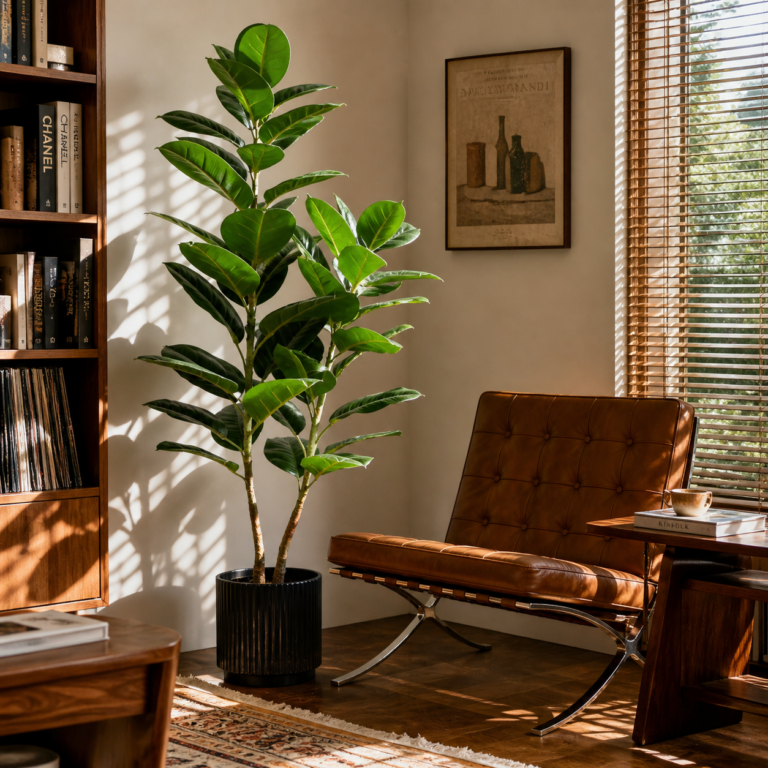
Alternatives and sourcing considerations
If budget allows, consider thermoplastic elastomers for flexible branching and co-extruded skin-core parts where the outer layer carries UV chemistry. For decorative installations with limited sun exposure, optimized LDPE with pigment adjustment may be sufficient. Inspect sample panels after 1,000 hours of accelerated UV test and request tensile and peel strength reports alongside colorfastness data before placing bulk orders.
Advisory: three golden rules for procurement
1) Specify measurable targets: require accelerated UV test hours, color delta limits, and minimum tensile strength in the contract. These become pass/fail gates at inspection.
2) Audit process control: verify extrusion parameters, compounding records, and material traceability at the supplier. Process drift creates batch-level failures.
3) Price for life: calculate replacement cadence and maintenance costs over five years, not unit price. Higher initial material cost often lowers total program expense.
Sharetrade sits where these choices meet procurement and risk—its model maps material specs to expected service life and cost outcomes, helping teams choose the right formulation and supplier, Sharetrade. —Final thought: pragmatic choices win over clever shortcuts.