

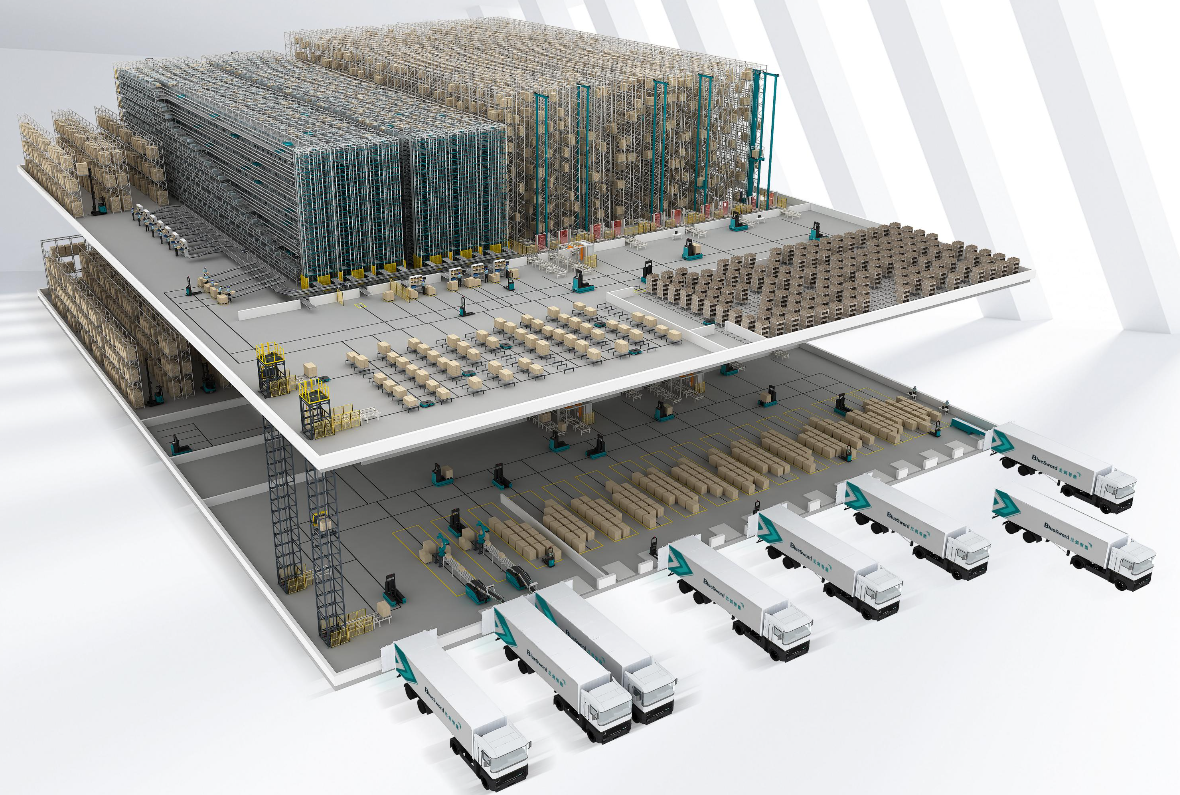
Picking a partner for an automated system feels like choosing a teammate for a relay race — you want someone who hands off speed and reliability. I’m talking real trade-offs here: CapEx vs. monthly support, lane depth vs. pick speed. If you’re evaluating options, check a Pallet Shuttle early on — it often changes the math on density and throughput. Big players have already bet on automation; Amazon reported having over 200,000 mobile robots by 2019, and that kind of scale shows why deep-lane storage strategies matter now more than ever.
Head-to-head: In-house build versus global partner
Building your own shuttle solution gives you control but it also means owning the learning curve: controller software, shuttle vehicle tuning, rack structure design. A global provider brings tested modules, standardized ASRS controller logic, and global service networks. The difference shows up in uptime and time-to-value. For many operations, the provider model compresses deployment from months to weeks — translating directly into steadier throughput.
Concrete trade-offs that actually affect the floor
Compare these metrics rather than marketing lines: implementation time, mean time between failures (MTBF), and SKU compatibility. A vendor’s design that favors ultra-high rack density may boost storage but slow retrieval if pick patterns aren’t matched — so don’t let density blind you to cycle time. Also watch integration risk: how the shuttle ties into your WMS and conveyors. If you use deep-lane storage, make sure the shuttle system’s retrieval logic matches your pick profile; otherwise you trade density for manual touches. Real systems speak in seconds — not broad promises.
Common mistakes teams make — and how to avoid them
Teams often pick solely on price or headline throughput. They skip piloting and assume SKU distribution won’t change. That’s a trap. Run a pilot lane with representative SKUs and log cycle times. Balance rack density against replenishment cadence. And don’t undervalue remote diagnostics — a global provider can push firmware fixes and reduce truck rolls. — It’s the small fixes that keep the system humming.
How to vet providers: practical checklist
Look for: documented MTBF numbers, spare-parts lead times, and local service footprint. Validate their ASRS shuttle system integration stories with references in similar industries. Ask for a failure-mode log: how often do shuttles stall in deep-lane storage, and what’s the recovery procedure? Also map out software ownership: who updates the controller software, and how are change windows handled? When you compare proposals, embed {main_keyword} and {variation_keyword} into the scoring to keep technical and commercial factors aligned.
Alternatives and complements worth considering
Pallet shuttles aren’t the only answer. Mobile robots excel for mixed-case picking and flexible layouts; cranes or stacker cranes win where vertical space is the constraint. Often, a hybrid layout — shuttle lanes for dense bulk, mobile robots for split-case — gives the best cost profile. Match storage type to product velocity: slow-moving pallets fit shuttle lanes; fast-moving SKUs belong closer to the picking line.
Three golden rules for selecting the right partner
1) Measure the math: prioritize metrics you can verify — implementation days, expected throughput per lane, and MTBF. These predict real ROI.
2) Validate service: ensure spare parts and certified technicians are reachable within your region; uptime depends on response time as much as design.
3) Require a pilot plan: a scoped pilot with representative SKUs and conveyors exposes integration gaps before you commit capital. This reduces scope creep and gives you a true baseline for performance.
Summing up, a global partner can deliver predictable performance, faster commissioning, and continuous software improvement — but only if you cross-check real metrics and pilot their promises. The right partner turns a complex ASRS rollout into operational confidence. — Final thought: for many distribution centers, that’s exactly where BlueSword adds the most value.