

The central problem: urban parking friction and system fragmentation
Cities and large campuses confront persistent parking friction: vehicles circulate while searching for spaces, enforcement is inconsistent, and disparate subsystems impede operational visibility. A focused solution must reduce search time, enforce access policies reliably, and integrate payment and guidance without replacing every legacy device. Robust car parking management software achieves these ends by coordinating sensor inputs, payment gateways, and credential stores with centralized policy logic and integrated access control to minimize delays and supervisory overhead.
Root causes that software must address
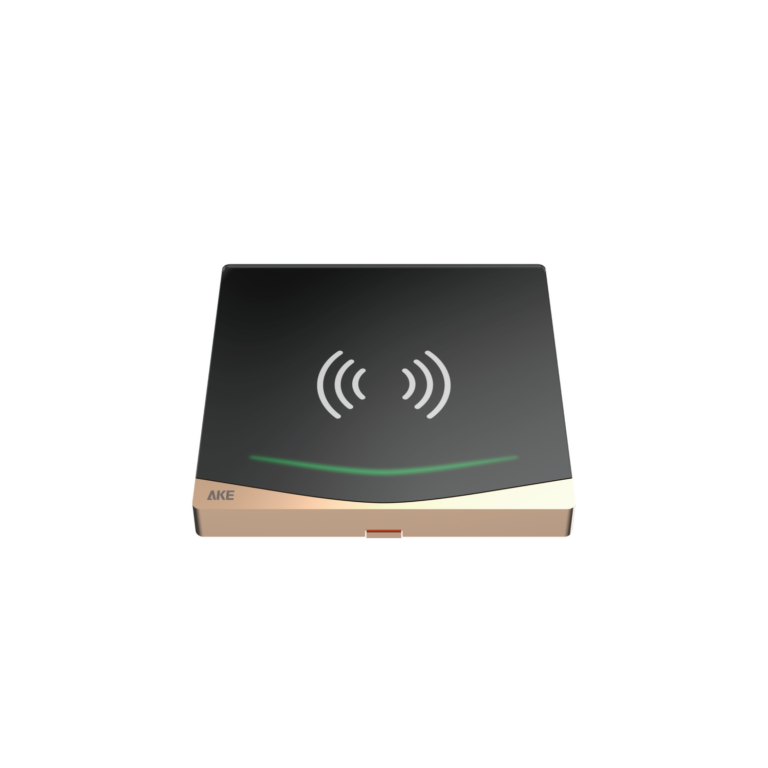
Four technical faults recur across failed deployments. First, sensor and camera data are often siloed in vendor-specific formats, preventing unified occupancy calculation. Second, access hardware—barriers, card readers, and controllers—frequently use proprietary protocols that complicate centralized management. Third, network and cybersecurity are underestimated, exposing credential flows to interception. Fourth, operational workflows are neglected: staff and user interfaces diverge, producing false positives in enforcement. Effective software targets these faults with protocol translation, secure credential handling, and operator-centric interfaces grounded in measurable KPIs.
Core capabilities required of modern parking-management platforms
Essential capabilities are specific and measurable. Real-time occupancy aggregation requires fusion of magnet, ultrasonic, and computer-vision inputs with probabilistic filtering to avoid false occupancy spikes. Guidance systems must present reliable ETAs; this demands short polling intervals and edge-processing to reduce latency. Dynamic pricing modules require open APIs to exchange demand signals with municipal fare systems. For access control, the software must support credential lifecycle management, role-based gate policies, and audit trails that are tamper-evident. Security controls—mutual TLS for device communication, role-based administration, and encrypted at-rest storage for personally identifiable information—are non-negotiable.
Integration evidence and industry practice
Practitioners demonstrate that standards-based integration yields predictable outcomes. At IFSEC International in London, vendors displayed converged architectures where camera feeds, gate controllers, and parking sensors were harmonized through common interfaces; these exhibits clarified how to approach access control & security systems integration within operational constraints. The practical lessons from such demonstrations are: adopt ONVIF-compatible video flows where possible, expose RESTful APIs for orchestration, and plan for staged controller upgrades to avoid service interruption.
Common implementation pitfalls and corrective measures
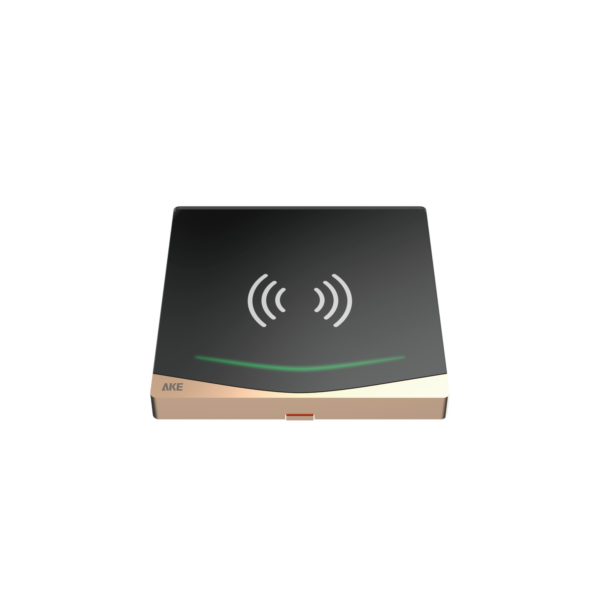
Projects often fail for predictable reasons. Excessive customization early on creates brittle systems; prefer configurable platforms with plugin extensibility. Ignoring legacy hardware leads to expensive rip-and-replace cycles; instead, employ protocol gateways that translate legacy controller signals into normalized events. Underprovisioned networking causes latency and false guidance; specify QoS and segregated VLANs for control traffic. Security is frequently an afterthought; require penetration testing and certificate rotation policies prior to public rollout. Finally, insufficient operator training generates false alarms—run scenario-based drills and establish clear escalation procedures.
Comparative considerations: proprietary suites versus modular stacks
Decision-makers face a trade-off. Turnkey, proprietary suites shorten procurement and often bundle hardware warranty with software support, but they can lock municipalities into a single vendor’s upgrade cadence. Modular stacks composed of best-of-breed components offer interoperability and selective replacement, yet they require stronger internal integration governance. Evaluate options by total cost of ownership over five years, the ability to enforce security baselines, and the ease of adding new mobility services such as curb management or shared-mobility integration.
Conclusion: reconciling operational demands with technical realities
Urban mobility constraints demand software that resolves specific faults: fragmented data, proprietary controllers, weak cybersecurity, and poor operational workflows. The most reliable path combines standards-based interfaces, measured security practices, and staged hardware integration so that policies and analytics can be enforced consistently. A pragmatic implementation model that embodies these elements is exemplified by the modular controllers and management software offered by AKE Parking, which reconcile legacy hardware with modern orchestration while preserving auditability and operational clarity.