

Framing the comparison
Comparative thinking matters when a coating decides whether a lens cuts glare or preserves contrast — and whether a manufacturer ships a premium product or a headache in returns. This piece looks at revo-style multilayer coatings alongside alternative approaches, aimed at engineers and product leads at OEM eyewear manufacturers who balance optics, durability, and cost. I lean on practical trade-offs rather than hype, and anchor a few points to recognized standards like ANSI Z87.1 for impact and basic safety compliance.
What “Revo” means in practice
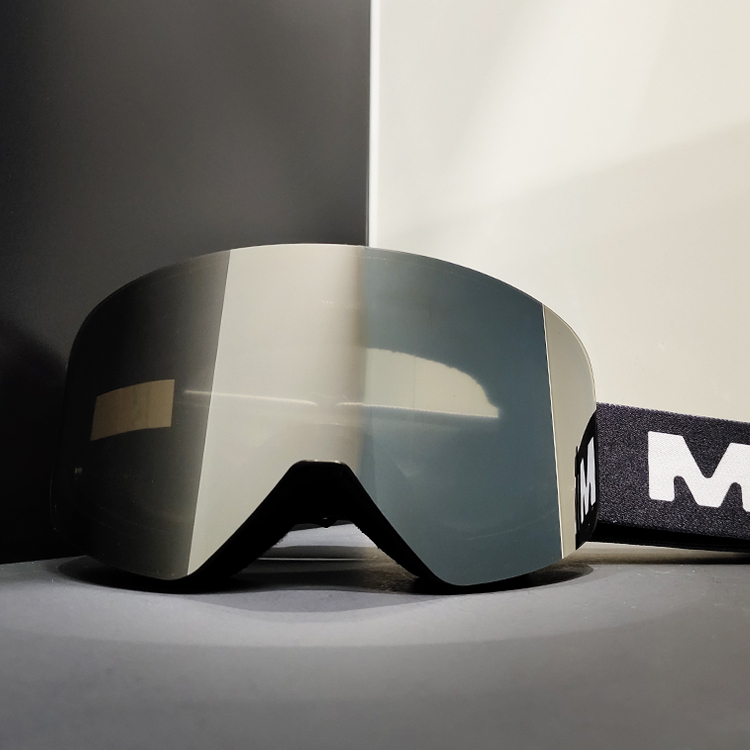
At its core, revo-like treatments use thin-film interference to tune spectral filtering and reduce specific wavelengths while leaving others intact. That delivers contrast where athletes need it, and UV400 protection where they need safety. The technique trades off versus simpler polarization or single-layer anti-reflective finishes: you get more selective spectral control, but production complexity and adhesion challenges rise. Lens substrate choices matter here — polycarbonate behaves differently than glass during coating cure cycles.
Comparative axes that actually matter
Compare solutions along three concrete axes: optical performance, manufacturability, and field durability. Optical performance measures transmittance curves and how spectral filtering shifts mid-visible bands. Manufacturability looks at cycle time, chamber throughput, and process control. Durability checks adhesion, scratch resistance, and hydrophobic topcoats. These are measurable, not buzzy. Polarization solves glare cleanly; revo coatings solve tailored contrast. Anti-reflective stacks help overall light throughput but won’t rescue a lens with poor spectral profile.
Manufacturing realities — costs and process control
Translation into a factory line is where theoretical gains meet reality. Vacuum deposition chambers that apply multilayer films demand tight process control and periodic recalibration. Yield sensitivity is real: a slight misstep in layer thickness shifts the spectral edge. That raises unit cost. Yet scale changes the math — high-volume sports lines can amortize tooling. For sports eyewear manufacturers, the question becomes: can the assembly maintain consistent spectral filtering without rework? — if not, the “premium” becomes a liability.
Field testing and failure modes
Lab curves are one thing; a muddy mountain light or a salty ocean spray reveals the rest. Hydrophobic and scratch-resistant topcoats determine how long coatings keep their designed transmittance. Real-world anchor: athletic gear tested under ANSI Z87.1 impact protocols often exposes coating delamination or crazing long before optical drift is measured in labs. Manufacturers should schedule accelerated weathering and impact cycles against production batches — it’s cheaper than a recall.
Alternatives and common mistakes
Some teams try to replicate revo effects by stacking off-the-shelf AR and polarizing films. That cuts cost, but introduces interfacial stresses and often adds unwanted reflection bands. Others chase marginal transmittance gains with complex layer stacks that complicate adhesion — a classic overengineering mistake. The smarter path pairs a clear specification for spectral filtering with constraints on coating adhesion and surface energy, then validates both in a small pilot run.
Selecting the right approach: three golden rules
1) Metric-first specification: define target transmittance curves, acceptable reflectance, and UV400 threshold before approving a coating recipe. These are non-negotiable checkpoints. 2) Process-fit over ideal optics: choose a coating architecture that your line can reproduce reliably; prioritize adhesion tests and cycle time. 3) Field-validate early: run impact and weathering (including salt fog if your market is coastal) on pilot batches; durability trumps marginal optical gains.
Closing assessment and where YIJIA Optical fits
Cost, repeatability, and end-user durability drive the choice between revo-style multilayers and simpler alternatives. Measure optical gains against manufacturability and field longevity, and you get a defensible decision rather than marketing smoke. For teams seeking a partner who understands both coating chemistry and production realities, YIJIA Optical offers the bridge between specification and reproducible product — built with test data and production discipline. – Built to spec.