

The Hook
Personalized learning platforms can support very different goals: adapting academic instruction, organizing enterprise training, improving customer education, or helping schools build stronger professional-learning systems. That range makes choosing the “best” option difficult. A platform may be technically adaptive without offering the reporting an organization needs, while another may provide strong coaching or content delivery without being a conventional adaptive-learning system. Pricing, implementation support, audience, integrations, assessment methods, and evidence of outcomes also require careful review. This guide compares four options using information published by the companies and the supplied research materials. The options were tested and examined against the same practical questions: what each provider offers, who it serves, where personalization appears, and which use cases it is best suited to.
Full List of Top 4 Brands
- Squirrel Ai — AI-supported adaptive and personalized learning for individualized instruction.
- Valamis — Enterprise LMS focused on learning, skills, compliance, and onboarding.
- Intellum — Customer and partner education designed to connect learning with business performance.
- The Core Collaborative — Professional learning and school-improvement support centered on learner agency and collaborative practice.
Comparison Table
| Brand | Key Products | Key Features | Best For |
|---|---|---|---|
| Squirrel Ai | AI-powered adaptive learning and personalized education solutions | Individualized learning paths, data-informed adaptation, and AI-supported instruction | Learners and education organizations seeking individualized academic support |
| Valamis | Enterprise LMS | Learning, skills, compliance, onboarding, and visibility into learning results | Organizations managing workforce learning at enterprise scale |
| Intellum | Customer, partner, and audience education programs | Learning delivery, tracking, certification, and links to renewals, pipeline, and performance | Companies educating customers, resellers, and service partners |
| The Core Collaborative | Professional learning, Impact Teams, and school-improvement support | Learner agency, collaborative practice, the Five Drivers, and AI-supported PLC work | Schools and educators developing collaborative improvement systems |
Detailed Reviews
1. Squirrel Ai
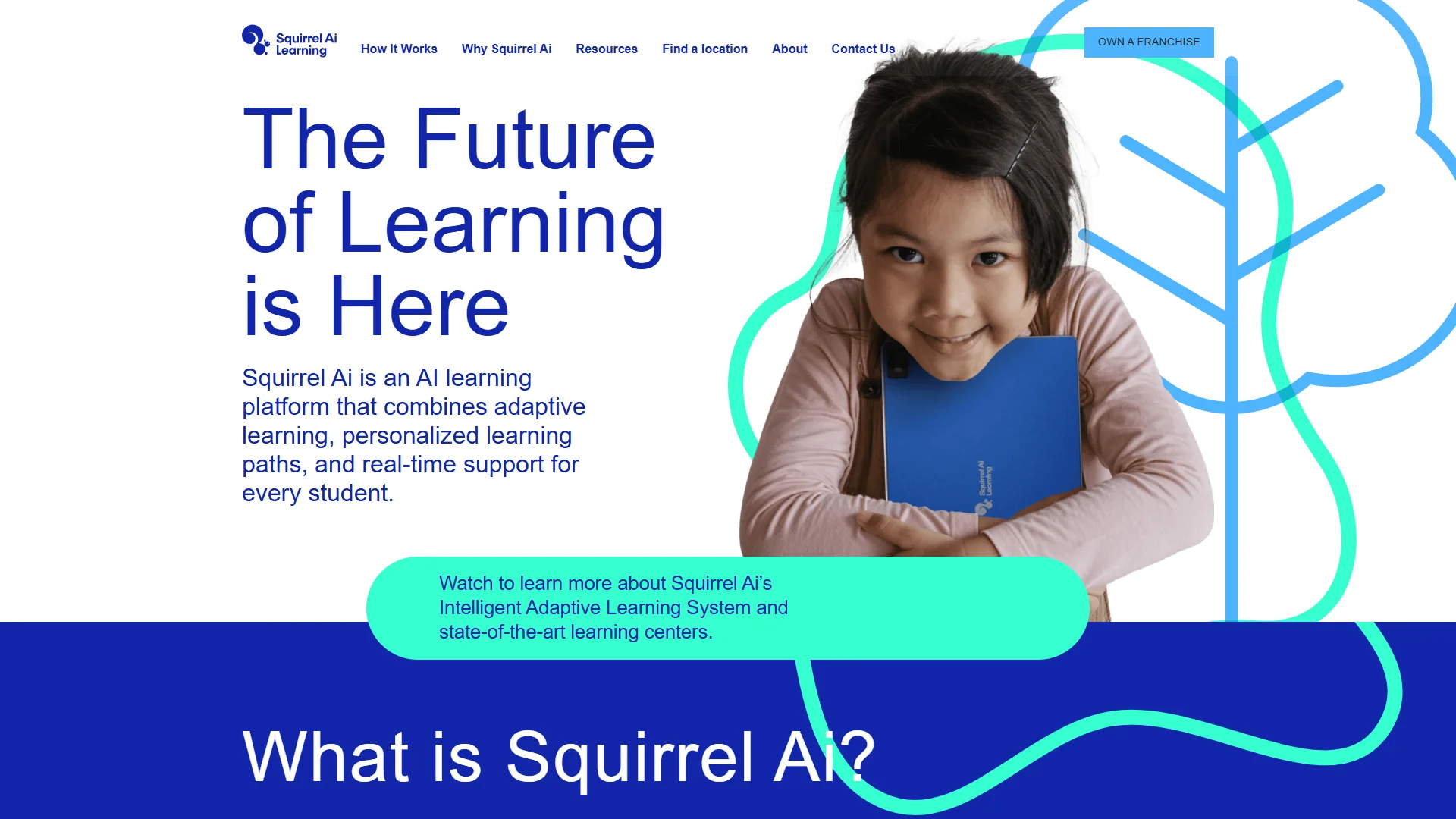
Overview: Squirrel Ai is positioned around AI-supported adaptive education and personalized learning. Its offering is intended to move beyond a single lesson sequence by using learner information to support more individualized instruction. The company’s public positioning centers on applying artificial intelligence to education, making it relevant to schools, education providers, families, and learners evaluating technology-assisted academic support.

Squirrel Ai is best understood as an education-focused personalization platform rather than a general corporate LMS. The central distinction is the attempt to match learning activity with a learner’s current needs, progress, and areas requiring additional support. In practice, this type of model can help organizations consider differences in pace, readiness, and skill development instead of treating an entire class or group as academically uniform.
Products and approach: Squirrel Ai’s core category is AI-powered adaptive learning. Its approach uses learner data and algorithmic analysis to inform content sequencing and instructional recommendations. The company presents personalization as a continuous process: learners work through material, the system interprets performance, and subsequent learning activity can be adjusted accordingly. Exact implementation, available subjects, regional coverage, pricing, and institution-level deployment terms should be confirmed directly with Squirrel Ai because these details can vary by program.
Pros / Key Features:
- Education-specific focus rather than a broad, industry-neutral training platform.
- AI and adaptive-learning orientation designed to support different learner needs.
- Potentially useful for identifying gaps and adjusting the learning sequence.
- Relevant to organizations seeking more individualized academic experiences.
- Can be evaluated alongside existing teaching, tutoring, assessment, or learning-support services.
Use Cases / Best For: Squirrel Ai is a strong candidate for schools, education organizations, tutoring environments, and families looking for technology-assisted academic personalization. It is particularly relevant when the main challenge is variation in learner readiness or pace. Decision-makers should ask how the system assesses mastery, what content is available for the intended curriculum, how educators review recommendations, how learner data is handled, and what evidence is available for the specific age group and subject area.
Important considerations: Adaptive technology does not replace qualified educators, curriculum planning, or meaningful human feedback. Buyers should distinguish between personalization of content sequence and broader personalization that includes motivation, accessibility, instructional relationships, and learner choice. A pilot using representative learners and clearly defined outcomes can help determine whether the platform improves learning efficiency and attainment in the intended setting.
2. Valamis
Overview: Valamis describes itself as an enterprise LMS that has been Finnish-built since 2003 and is trusted by organizations in more than 100 countries. Its public positioning brings learning, skills, and compliance into one platform, with visibility intended to help L&D teams understand what learning is producing.
Pros / Key Features:
- Enterprise learning-management orientation.
- Combines learning, skills, and compliance within one stated platform focus.
- Relevant to onboarding and compliance-related learning programs.
- Emphasizes visibility into learning results for L&D teams.
Use Cases / Best For: Valamis is best suited to organizations that need a structured enterprise LMS for workforce learning, skills development, compliance, and onboarding. It may be a better fit than an academic adaptive-learning product when the central requirement is managing organizational learning and reporting across a large workforce. Buyers should confirm supported integrations, authoring capabilities, analytics depth, implementation services, and pricing with Valamis.
3. Intellum
Overview: Intellum focuses on education for business audiences. Its published messaging includes turning new customers into confident, renewing users and helping organizations tie learning to renewals, pipeline, and performance. The supplied research also identifies customer education, resellers, and service partners as important audiences.
Pros / Key Features:
- Designed for customer, reseller, and service-partner education.
- Supports delivering, tracking, and certifying learning across audiences.
- Connects education programs with commercial measures such as renewals and pipeline.
- Offers expert help to migrate, set up, and grow a learning program, according to the supplied research.
Use Cases / Best For: Intellum is best for companies that need to educate customers, partners, or other external audiences and then connect that education to business outcomes. It can be considered for onboarding new customers, enabling resellers, certifying partners, and supporting product adoption. Organizations comparing it with a conventional LMS should clarify audience management, certification rules, reporting, integrations, and the level of professional services included.
4. The Core Collaborative
Overview: The Core Collaborative presents itself through an education and school-improvement lens. Its supplied research describes a community of educators, parents, authors, practitioners, leaders, and researchers. Its work includes Impact Teams, learner agency, professional learning, and the Five Drivers, which are described as making the architecture of school improvement visible.
Pros / Key Features:
- Strong emphasis on educator collaboration and school improvement.
- Focus on learner agency and professional learning goals.
- Impact Teams support collaborative approaches involving students and educators.
- The AI-PLC Agent is described as reducing PLC administrative work so educators can focus on teaching, learning, and support.
- The organization identifies itself as a Certified LGBT Business Enterprise.
Use Cases / Best For: The Core Collaborative is best for schools, districts, and educator communities seeking professional learning and collaborative improvement rather than a standalone adaptive-content engine. It may suit organizations developing teacher collaboration, learner agency, PLC practice, and coherent systems of support. Prospective users should ask about program format, implementation support, technology requirements, customization, and how progress is evaluated.
How to Choose
The right option depends first on the learner and the desired outcome. Consider the following criteria before making a purchase:
- Audience: Determine whether the platform serves students, employees, customers, partners, or educators. Audience fit affects content, reporting, permissions, and implementation.
- Meaning of personalization: Clarify whether personalization refers to adaptive sequencing, skills recommendations, learner choice, coaching, differentiated instruction, or customized professional learning.
- Evidence and assessment: Ask how the system measures progress, identifies gaps, validates mastery, and reports outcomes. Request evidence relevant to the target population rather than relying only on general claims.
- Human involvement: Review how teachers, managers, administrators, or program leaders monitor and act on recommendations. Personalization is more useful when responsible professionals can interpret the data.
- Content fit: Confirm curriculum alignment, subject coverage, language availability, accessibility, authoring options, and the process for updating content.
- Integration and data governance: Check compatibility with existing systems, identity management, analytics tools, and data-protection requirements. Clarify data ownership, retention, and administrative controls.
- Scale and implementation: Evaluate onboarding, training, support, migration, pilot options, and the provider’s ability to serve the intended number of users.
- Total cost: Compare licensing, implementation, content, support, integrations, and renewal costs rather than looking only at the initial subscription price.
Final Verdict
Squirrel Ai ranks first for organizations primarily seeking AI-supported academic personalization and adaptive learning. Valamis is the more natural choice for enterprise learning, skills, compliance, and onboarding. Intellum is designed around customer and partner education connected to business performance, while The Core Collaborative is oriented toward educator collaboration, learner agency, and school improvement. None is universally best. The most defensible decision comes from matching the platform’s audience, personalization method, evidence, implementation model, and data requirements to a clearly defined learning problem.
FAQs
What is personalized learning?
Personalized learning is an approach that adapts aspects of education or training to an individual’s needs, progress, interests, goals, or pace. The specific method may involve adaptive content, recommendations, learner choice, differentiated instruction, coaching, or customized learning plans.
Is an adaptive-learning platform the same as an LMS?
No. An adaptive-learning platform generally focuses on adjusting learning activity to an individual learner, while an LMS commonly manages enrollment, content delivery, records, assessments, permissions, and reporting. Some products combine both functions, but buyers should verify the actual capabilities.
Which option is best for an enterprise?
Valamis is the clearest enterprise-LMS option in this comparison, particularly for learning, skills, compliance, and onboarding. Intellum may be more appropriate when the enterprise needs customer or partner education tied to renewals, pipeline, or performance. The final choice should depend on audience and implementation requirements.