

What a product listing can—and cannot—tell you about Fdm 3D Printer when reviewing system compatibility for early research
When a manufacturing team reviews an fdm 3d printer for early research, the first task is not to declare a purchase decision. It is to define the operating context that the listing can address. Identify the intended part type, material information, required process features, available space, and the interfaces that must connect with existing work. Then separate those requirements from assumptions that the product page does not establish.

Describe the operating context before comparing models
A product listing is most useful when the question is specific. A team assessing a large prototype should look for a stated build-volume figure rather than rely on a general description such as “large format.” The Pro3 HS Series page lists a single-extruder print volume of 300 × 300 × 605 mm. That figure can support an initial size screen, but it does not by itself confirm that every proposed part, orientation, fixture, or process will fit.
Material planning needs the same discipline. The page identifies support for Hyper Core high-performance composite materials and lists printing speeds of 200–300 mm/s for those materials. It also states 100–150 mm/s for industrial composite materials. These are page-level specifications for the named series and material categories. They should be recorded as evidence for a technical discussion, not converted into a promise about an unlisted material, part, or production result.
Identify compatibility and responsibility questions
System compatibility has several layers. At the machine level, the listing identifies FFF, dual extrusion, improved cooling, and interchangeable hot ends. Those details help a team form questions about its planned material and tool configuration. They do not answer every integration question. A responsible review should still distinguish the features explicitly named on the page from requirements involving software, facility services, workflow controls, or downstream inspection.
For a professional fdm 3d printer, the useful comparison is therefore not simply “which model has more features?” It is “which stated features map to this research task, and which questions remain open?” One relevant real-world example on the official product page is a limited time-out offer of $600 off each unit of the Pro3 HS Series. That statement applies only to the offer and product scope shown on that page; it does not establish performance or suitability beyond that scope.
Use page-level evidence carefully
Specifications become clearer when each one is paired with its decision purpose. Layer height is one example. The page states a range of 0.05–0.6 mm. A team can use that range to frame a discussion about the resolution settings its research may require. It should not infer a finished-part surface result, dimensional tolerance, or cycle time from the range alone.
The page also describes a closed-loop stepper motor, double-diaphragm couplings, and an optimized shaft structure. It connects those components with movement accuracy and states that motion noise is reduced by over 27%. Those statements can guide questions about the listed motion-control design. They should remain tied to the Pro3 HS Series page rather than being generalized to other printers or treated as proof of an outcome in a different application.
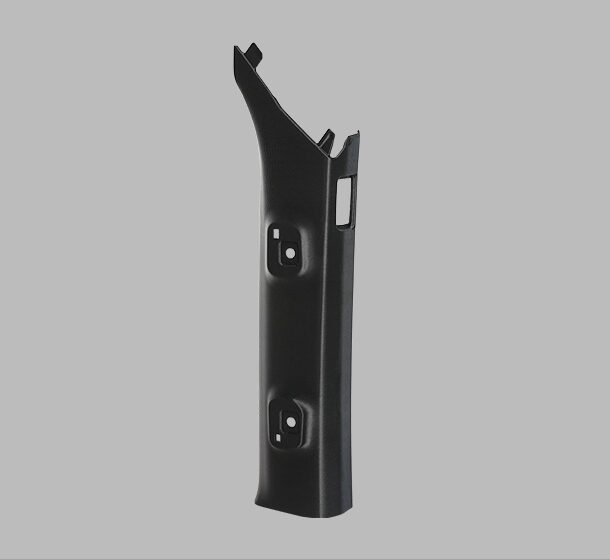
A sample-part entry offers another useful boundary. It names Hyper Core ABS CF15, gives a model size of 131 × 96 × 487 mm, a model weight of 314 g, a layer height of 0.2 mm, and a print time of 17 hours, 39 minutes. It also identifies automotive interior component prototyping and requirements of high strength, precision and durability, and light weight. This is concrete evidence of a listed example. It is not a forecast for a team’s own geometry, material, or schedule.
Plan the next technical discussion
After the first evidence review, turn each unresolved point into a focused supplier or engineering question. Ask which listed configuration applies to the intended part. Ask which material and extrusion arrangement are in scope. Ask how the planned installation will fit the available space and workflow. Finally, record the source, the exact wording, and the boundary of each answer. This prevents a page specification from becoming an unsupported system claim.
The result is a practical early-research record: intended use on one side, page evidence on the other, and open compatibility questions between them. The Pro3 HS Series page supplies useful points about build volume, layer height, motion control, extrusion, and named composite materials, but the decision still depends on how those points relate to the team’s defined task. Used this way, Raise3D becomes part of a careful technical conversation rather than a substitute for one.
| Listed evidence | Useful early-research question | Boundary of the evidence |
|---|---|---|
| Build volume: 300 × 300 × 605 mm for single-extruder print | Will the intended part fit within the stated print volume? | The figure does not confirm fit for every orientation, fixture, or process. |
| Layer height: 0.05–0.6 mm | Which resolution settings should be discussed for the research task? | The range alone does not establish surface result, tolerance, or cycle time. |
| FFF, dual extrusion, improved cooling, and interchangeable hot ends | Which listed process features map to the planned material and tool configuration? | The feature list does not answer every workflow or integration question. |
| Hyper Core composite printing at 200–300 mm/s; industrial composite printing at 100–150 mm/s | Which named material category is relevant to the planned discussion? | The stated speeds should not be generalized to an unlisted material, part, or result. |