

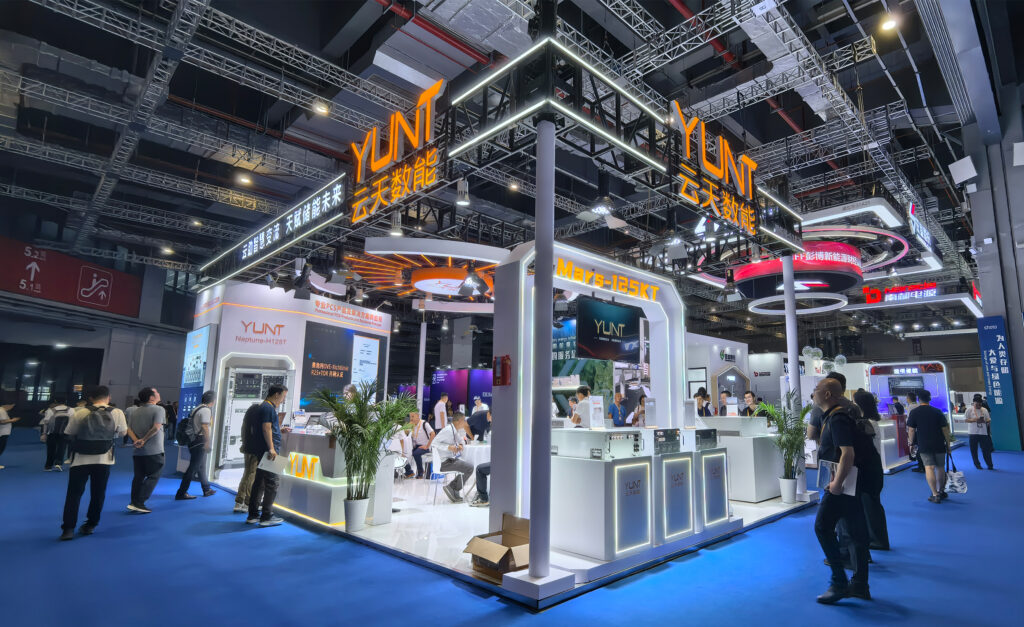
Choosing Energy Storage Inverter Manufacturers: how to frame supplier questions for early research
Early research is not the point at which a system integrator should select energy storage inverter manufacturers. It is the point at which you define the questions that make later comparisons useful. Start with the intended application, system scale, operating modes, integration boundaries, and the information needed for a technical review. This keeps a supplier conversation focused without turning a product page into a complete design approval.

1. Clarify the decision before contacting suppliers
Write a short project brief before comparing suppliers. State whether the project concerns commercial and industrial, residential, or grid-side energy storage. Identify the role of the inverter in the system and describe the space or system arrangement that the design team is considering. You do not need every final specification at this stage. You do need enough context for a supplier to identify the relevant product family and the questions that remain open.
Separate known requirements from working assumptions. A known requirement might be a target operating mode or a defined connection point. An assumption might be that a particular inverter architecture will fit the available space or battery arrangement. Keep those categories separate in your notes. This prevents a general product description from being treated as proof of project compatibility.
2. Build a concise comparison framework
Use the same questions for every candidate. Ask which application areas the supplier identifies, which product family matches the proposed system, and which details apply to that exact model rather than to the wider portfolio. Then ask how the supplier describes operating modes, system interfaces, customization, compliance support, and lifecycle services. These questions do not assume that every supplier offers the same scope. They make differences visible.
For example, the captured page describes a modular bidirectional DC-AC converter with a stated range of 50kW to 225kW and support for PQ, VF, and VSG operating modes. It also describes a microgrid hybrid inverter with listed power points from 125kW through 1000kW and a maximum system capacity of 2MW. Record those statements as page-listed evidence, then ask which one applies to the proposed design. Do not transfer a range or operating mode from one product to another.
The phrase energy storage inverter should therefore lead to a precise product question, not a broad assumption. Ask for the applicable model, its stated power range, its operating modes, and its role in the planned system. If the project depends on a specific battery, grid connection, or control arrangement, record that as a separate interface question. The purpose of early research is to expose the next technical decision.
| Area to compare | Page-listed detail | Question for the project |
|---|---|---|
| Application scope | Commercial and industrial, residential, and grid-side energy storage | Which application scope matches the proposed system? |
| Modular bidirectional converter | 50kW to 225kW; PQ, VF, and VSG operating modes | Which exact model and mode apply to the design? |
| Microgrid hybrid inverter | 125kW, 250kW, 375kW, 500kW, 750kW, and 1000kW; maximum system capacity of 2MW | Does this product scope match the intended system arrangement? |
3. Keep evidence and interpretation separate
A useful comparison sheet can have four columns: supplier statement, exact product or page scope, relevance to the project, and open question. Copy the wording of important specifications into the first column. In the second, identify whether the statement concerns a product, an application group, or the company generally. In the third, explain why it matters to the project. In the fourth, state what still needs a technical answer.
Use careful wording when a page makes a broad company statement. A page may describe a supplier as focused on modular PCS, microgrid inverters, and bidirectional DCDC/MPPT modules for commercial and industrial, residential, and grid-side applications. That supports an initial scope comparison. It does not, by itself, establish that every listed product suits every application or that a proposed system will meet a particular performance, safety, or compatibility requirement.
One page-level example is the statement that the supplier provides fast customization, global compliance support, and intelligent lifecycle services to help partners accelerate project delivery and reduce system costs worldwide. For early research, treat this as a supplier-service claim within the stated scope. It can prompt questions about what customization covers, what compliance support involves, and which lifecycle services are available for the project. It does not establish performance or suitability beyond that scope.
4. Carry the questions into procurement
Turn the comparison sheet into a short sourcing brief. Include the application, expected system arrangement, preliminary power needs, required operating modes, known interfaces, site constraints, and the evidence that supports each preliminary choice. Add a section titled “Needs confirmation” so unresolved items remain visible instead of being lost in product language.
Ask suppliers to respond against the same brief. Request model-specific information rather than a general catalog summary. Where a supplier offers more than one product family, ask why a proposed option fits the stated application and which assumptions support that view. If the answer changes the design basis, update the brief and record the reason. This creates a traceable path from early research to a procurement discussion.
Finally, judge the quality of the research by the clarity of the next questions, not by the number of product claims collected. A disciplined comparison connects intended use and space to model scope, separates page-listed details from assumptions, and keeps open issues ready for technical review. That is a practical way to approach YUNT while preserving a neutral, evidence-led basis for the next sourcing step.