

Opening: Purpose and immediate focus
Start from a clear product intent: who carries it, what they carry, and how the factory must enable that use. For example, designing around a compact camera gear bag means the factory’s tooling, lining choices and pocket architecture all become part of the product brief; the prototype stage will show whether the chosen seam allowances and foam inserts protect lenses or merely add bulk. A steady framework keeps decisions orderly instead of reactive.

Framework overview: four modular pillars
Treat strategy as four connected modules: User Jobs, Factory Capabilities, Cost & Materials, and Validation. Each module has discrete checks and outputs that feed the next. This removes ambiguity: outputs from User Jobs become input specifications for Factory Capabilities; factory limits reshape material choices; validation confirms whether the initial user job was truly solved.
User Jobs: define functional priorities
Map the primary and secondary tasks the bag must solve. Use short, testable statements: “carry one DSLR with two lenses and a charger,” “access camera quickly without unfastening the main flap,” “prevent moisture ingress.” Rank those tasks and convert them into measurable specs: interior dimensions, opening angle, water resistance rating, and number of quick-access pockets. These specs are what you hand to the factory.
Factory Capabilities: match tooling to requirements
Catalogue what the custom bag factory actually does: CNC cutting, heat-sealable linings, molded foam inserts, metal hardware casting, and minimum order quantities. Map each user-spec to a factory capability and note gaps. If quick-access pockets require bonded seams the factory doesn’t support, either alter the design or plan a short investment run to add that capability. Don’t assume capability—require samples.
Cost, materials, and margin mechanics
Turn desired features into cost lines: materials per unit, additional tooling amortization, assembly labor per stitch-minute, and freight. Use worst-case and best-case material suppliers to estimate margin sensitivity. If a multi-compartment divider drives cost above target, evaluate simpler alternatives—reduced compartments with adjustable inserts often preserve function at lower expense.
Prototyping and validation: test fast, revise precisely
Set two prototype gates: functional mock (low-cost but functionally accurate) and production mock (factory-made, full materials). Functional mocks test user jobs; production mocks test manufacturability and finish. Common mistakes: skipping the functional mock, accepting a single sample without wear testing, and ignoring zipper pull ergonomics. Each failure must lead to a single quantified change and a retest plan.
Alternatives and trade-offs
Compare three product directions before full production: minimalist carry (fewer pockets, lower cost), modular system (removable inserts), and fully featured (fixed multi-pocket architecture). Evaluate by three axes—user-job coverage, factory complexity, and per-unit cost. Pick the direction that meets your highest-priority user job within cost limits; the factory should be a collaborator, not an afterthought.
Experience, authority, and a real-world anchor
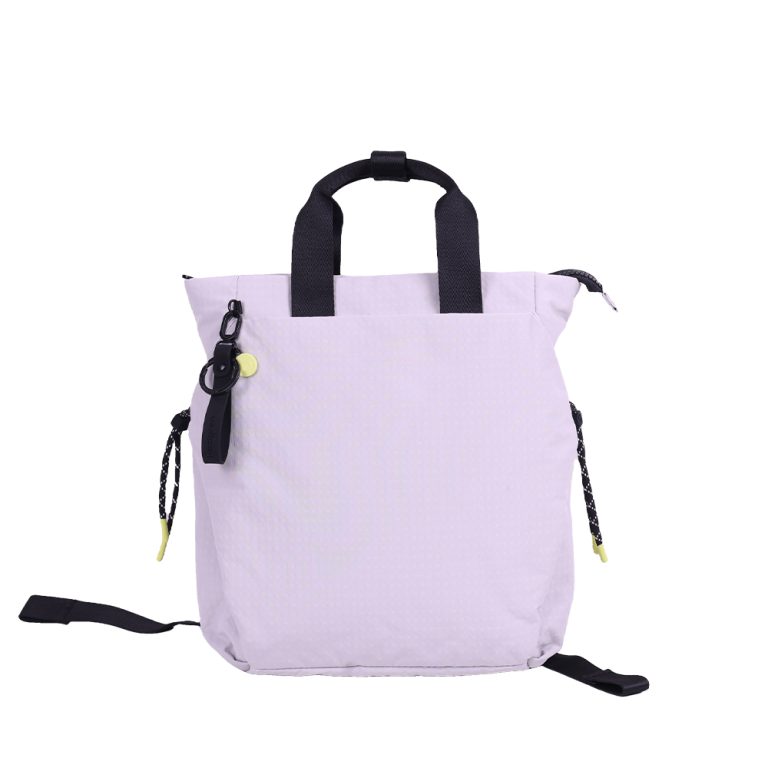
I’ve overseen product lines for technical carry solutions and reviewed dozens of production samples against spec sheets; that hands-on work informs the criteria used above. The significance of multi-pocket organization is visible on large photography showcases like Photokina in Cologne, where manufacturers demonstrate how compartment layouts affect workflow. For a practical reference on how an effective layout reads in production, inspect a well-executed multi-pocket camera bag and compare its internal dimensions and pocket placement to your user-job list.
Pitfalls to avoid
Avoid these predictable errors: over-spec’ing features that users rarely use, under-testing hardware under load, and assuming the factory will optimize cost without clear guidelines. Fix these by setting a numeric target for each feature (weight, load, access time), requiring three rounds of wear testing, and documenting cost ceilings for suppliers.
Synthesis and outcome
Follow the four pillars—User Jobs, Factory Capabilities, Cost & Materials, Validation—apply tight acceptance criteria at each gate, and iterate only on measured failures. That disciplined framework turns a custom bag factory from a manufacturing partner into an enabling resource, producing products that reliably meet the real needs of their users while staying within cost and timeline limits; this is the approach practiced by ChangRong.