

Start here — your priorities, not the vendor’s
You’re trying to solve clear problems: reduce incidents, prove where assets were, cut wasted miles. I focus on what you actually need first, then match technology to those needs. If incident verification matters, an AI dashcam that links video and GPS events often shortens investigations from days to minutes. I’ve spent a decade installing connected dashcam systems for municipal and commercial fleets in New York City, so these steps reflect practical trade-offs you’ll actually face.
Implementation checklist — core items
- Define clear, measurable goals. List 3 priorities (safety incidents per 100k miles, route adherence %, idling hours). Keep them specific and time-bound.
- Map assets and use cases. Separate long-haul tractors, delivery vans, and unpowered trailers — they need different hardware and data flows.
- Pick GPS accuracy requirements. Urban routes need higher sampling and faster fixes; rural runs can tolerate lower frequency to save data costs.
- Choose integration method. Decide whether to use OBD-II, CAN-bus, hardwired power, or battery trackers based on vehicle type and warranty constraints.
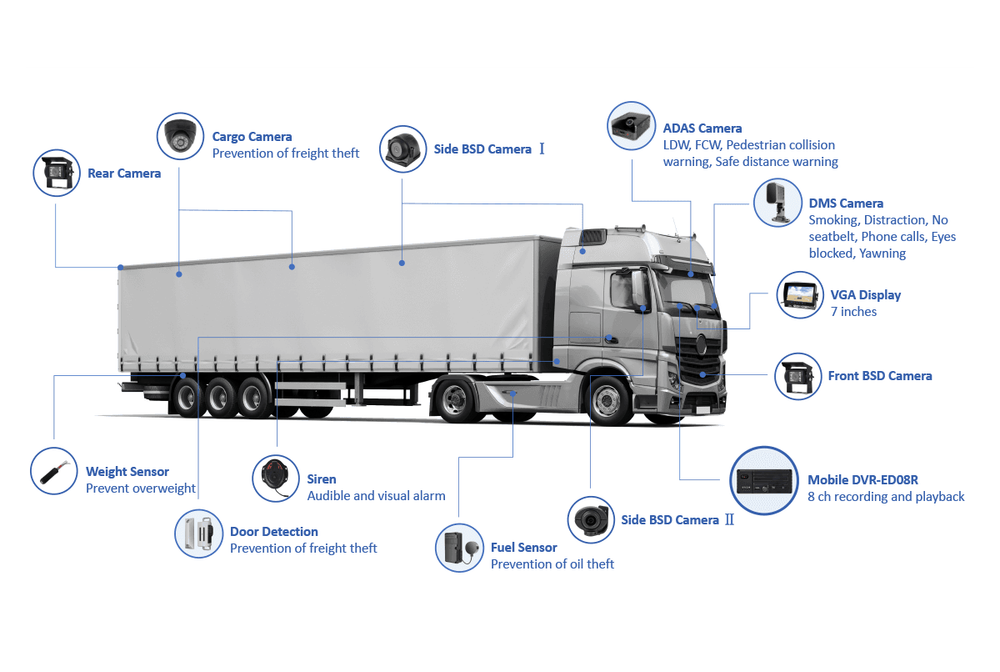
- Decide video vs. telematics priority. If you need crash context, specify front/rear cameras and synchronized GPS timestamps.
- Plan connectivity and data budget. Select cellular bands and a SIM plan that covers your service areas and peak data from cameras.
- Confirm power and installation standards. Define fuse-tap or inline fuse options, vibration mounts, and wiring paths for safe installs.
- Set data retention, access, and compliance rules. Determine who sees raw video, who extracts clips, and how long logs are kept.
- Define KPIs and dashboards before deployment. That keeps vendors honest and speeds post-pilot evaluation.
- Schedule a controlled pilot (2–10 vehicles). Test hardware, alerts, and reporting with real drivers and routes for 4–8 weeks.
- Plan for training and SOPs. Short, role-specific sessions for drivers, dispatchers, and safety managers prevent misuse and frustration.
- Budget recurring support and field maintenance. Factor in replacement cameras, SIM renewals, and firmware updates.
What to test during the pilot
- Sync accuracy: confirm GPS timestamps match video frame time to within one second.
- Alert fidelity: validate false positives and missed events by reviewing recorded clips.
- Network behavior: watch data spikes when cameras upload; test low-signal recovery.
- User flows: have dispatchers pull location and video together; time the action from alert to resolution.
- Driver feedback: collect one-line notes after the shift — installation comfort, perceived privacy, any signal loss.
Common pitfalls and how to avoid them
- Buying on price alone — cheap GPS devices often lack reliable GPS chips or firmware updates. Pay a bit more for proven reliability.
- Skipping the pilot — full deployments expose wrong assumptions fast. Test first.
- Ignoring power constraints — improper wiring leads to dead batteries or blown fuses; specify install standards.
- Over-collecting data — storing everything creates costs and privacy headaches. Capture what you need to meet goals.
- Not training users — a dashboard nobody trusts becomes a paperweight. Quick, repeated sessions work best.
Comparing camera and telematics options
Basic dashcams record video but often lack live integration with GPS and alerts. Telematics-only units track location and engine data well but miss visual context. A modern connected dashcam blends both: it ties GPS events to video clips and gives automated incident flags. Choose based on the highest-value outcome: legal clarity and liability reduction lean toward video+GPS; simple route optimization can work with telematics alone.
Vendor selection questions to ask
- Can you demonstrate timestamp synchronization between GPS and video?
- How are firmware updates handled — remotely or on-site?
- What are real-life upload times for 30–60 second clips on weak cellular?
- Who owns the data, and how do you support legal discovery requests?
- What’s your replacement and RMA policy for hardware failures?
Rollout and measuring success
Start with priority routes and expand in waves after fixing pilot issues. Track the KPIs you set at the beginning and compare pilot vs. month-three results. Expect early wins in incident clarity and driver coaching opportunities; timing reductions and fuel savings follow as behavior changes take hold.
Closing thought — practical value, quietly delivered
You want reliable location, clear incident evidence, and systems your team will actually use. Done right, GPS tracking plus synchronized video turns arguments into facts and saves time across safety, claims, and operations. For fleets that need dependable alignment of hardware, connectivity, and workflows, BSJ offers options that fit those practical needs without overcomplication.