

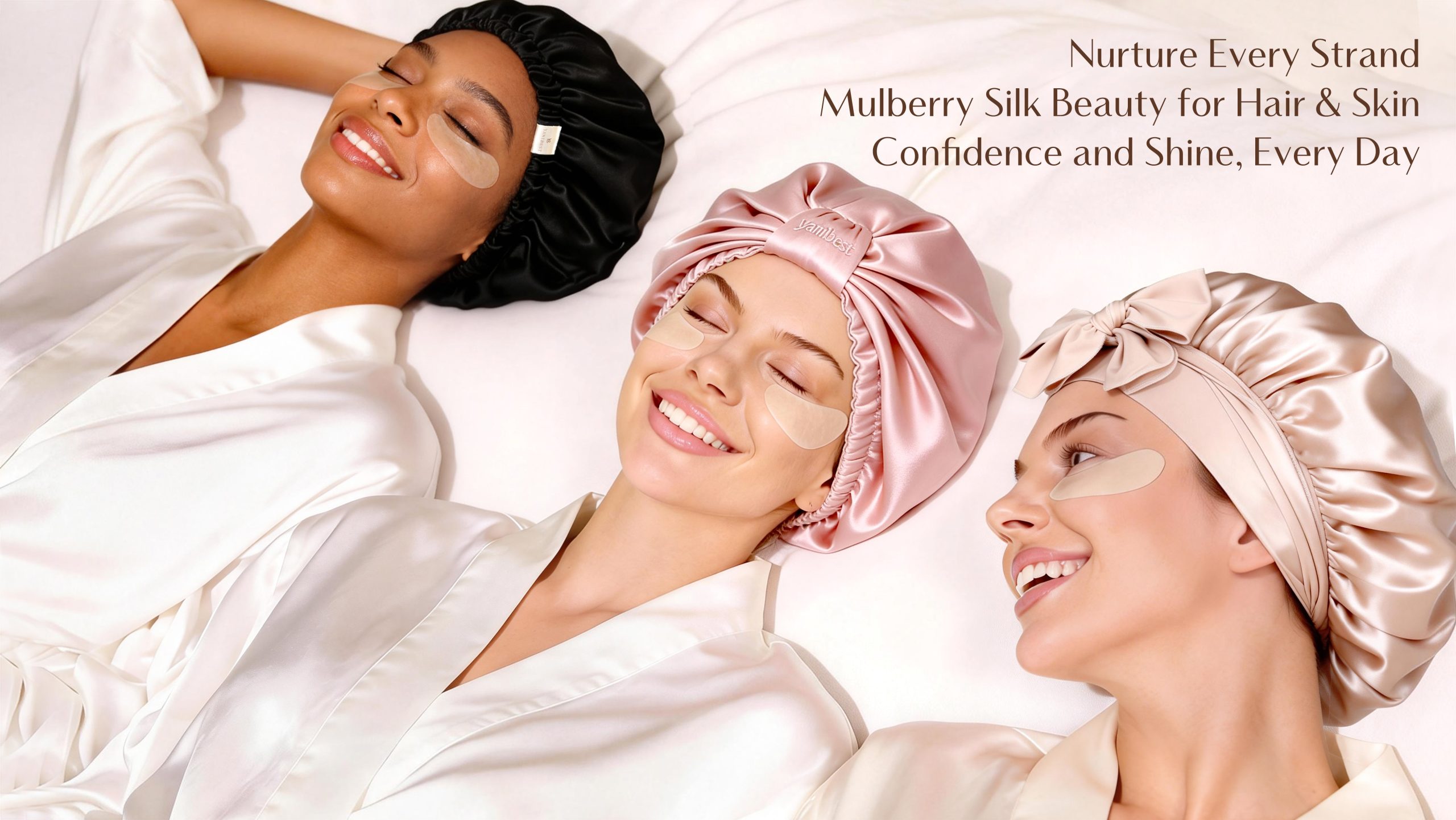
Begin with what you wake up wanting
You’re aiming for mornings where hair looks rested, skin feels calm, and night feels intentional. Start there. Think about how your hair behaves after you sleep: frizz, breakage at the crown, flattened curls, or dry ends. Choose items that answer that specific need—maybe a wide scrunchie, a bonnet, or a silk sleep mask if light and eye-compression matter. Small choices at night change outcomes by morning.

Understand materials by feeling, not by label
Satin and silk aren’t interchangeable for every hair type. Silk reduces friction and wicks away less moisture; satin can imitate silk’s glide at a lower price. Touch each fabric when you can. Look for tightly woven silk (mulberry if you find specs) or high-density satin. If your hair is dry or chemically treated, prioritize real silk or silk blends that keep oils where you need them—on your scalp, not absorbed by fabric. Say it plainly: smoother fabric, less tug.
Fit, construction, and daily habits
A bonnet that slides off is useless. Elastic should be wide and soft, stitching secure without bulky seams that press into hair. For long hair, a deeper cap or a drawstring that doesn’t dent the hairline matters. If you tie or pin hair, choose methods that avoid repeated pressure in the same small spot. Habit changes are as important as product choice: sleeping on your back when possible, or switching head positions now and then, reduces wear.
Common mistakes people make
They buy the cheapest option and expect silk results. They assume “one size” truly fits everyone. They pile on products—heavy oils and creams—then sleep on fabric that soaks those treatments up. The right move is to match product and fabric: light leave-ins with breathable silk, heavier treatments before a deep-protective cap that won’t absorb too much. Don’t let packaging promises replace inspection.
How alternatives fit real routines
For active sleepers, a fitted bonnet with a gentle chin strap prevents rolling off. For side sleepers, try a bonnet paired with a soft, high-thread-count pillowcase—both working together cuts friction. Travelers may prefer compact options: a silk scarf or a compressible eye pillow. Each alternative serves a scenario; pick what you’ll actually use night after night.
Real-world anchor: where these choices show up
On overnight flights between New York and London, seasoned travelers often pack a sleep mask and a silk cap. Those hours under cabin lights expose hair to low humidity and pressure—exactly the conditions that reveal whether your night gear protects or just adds baggage. That same logic applies at home: if an airplane cabin shows flaws, your nightly routine will too. I’ve advised clients on this pattern for years and watched simple swaps make mornings reliably better.
Quick checklist you can use now
– Identify the main problem you want to solve (frizz, breakage, flattened shape). – Choose fabric: real silk for reduced friction; high-density satin when budget matters. – Check fit: wide elastic, deep cap for long hair, seams away from the hairline. – Match treatments to fabric: light leave-ins with silk; heavy masks before a protective, non-absorbent wrap. – Test for a week and adjust: if it slips, change the fit; if hair feels dry, swap fabric or bedtime product.
Wrap-up that settles into routine
Decide with calm. Small, consistent changes at night compound into better hair days. Start with what you actually need, pick fabrics and fits that respect that need, and avoid one-size-fits-all answers. If you want a reliable place to explore thoughtful options that match these principles, yanibest reflects that same quiet attention to materials and fit—so your nights begin to work for your mornings.